

7 Ways to Honor Pacific Islander Heritage
Table of Contents
- 1. Wear and Share Pacific Islander Culture and Traditions
- 2. Learn Pacific Islander History and Contributions
- 3. Support Pacific Islander-Owned Businesses and Creators
- 4. Understand Hafa Adai Meaning and Cultural Context
- 5. Attend Cultural Events and Community Celebrations
- 6. Consume Pacific Islander Stories Through Film, Music, and Literature
- 7. Engage Year-Round and Avoid Cultural Appropriation
- Frequently Asked Questions
Last Updated: October 8, 2026
1. Wear and Share Pacific Islander Culture and Traditions
Wearing Pacific Islander apparel isn't just fashion, it's a direct way to honor pacific islander heritage and keep your culture visible every day.
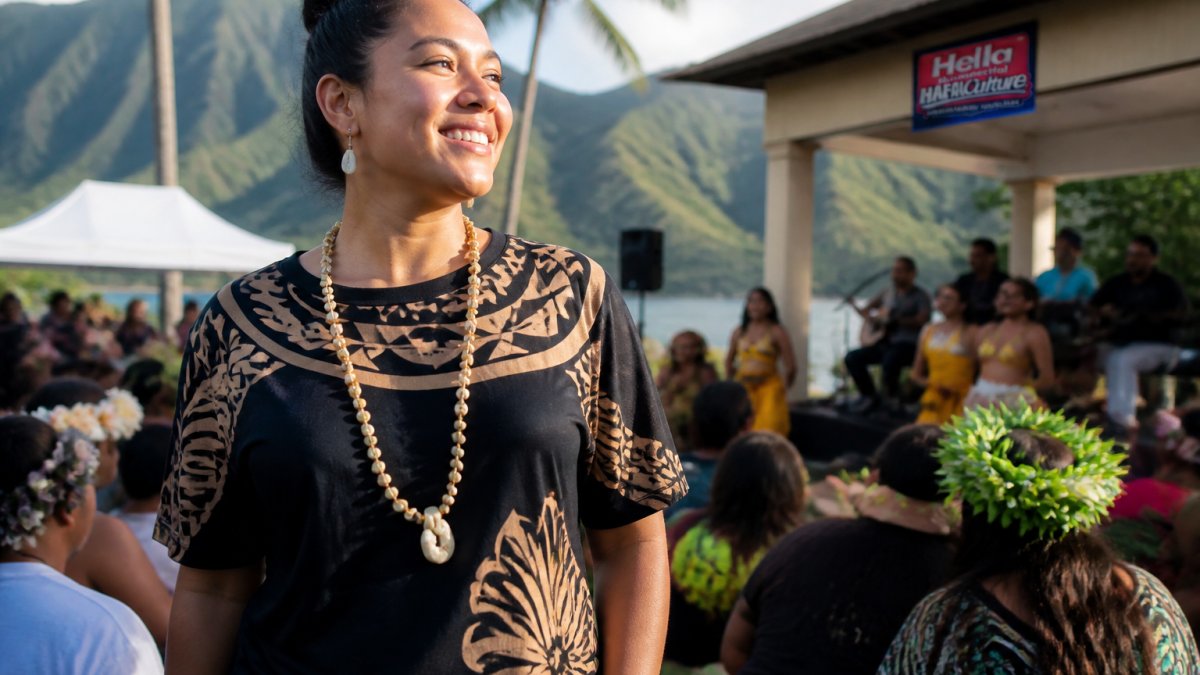
At Hella Disrespectful Clothing, representation matters. The Pacifika Culture Tee celebrates the shared strength of Polynesia, Melanesia, and Micronesia with traditional voyaging canoes and cultural patterns.

Wearing these pieces sparks conversations: when someone asks about your shirt, you share your story and culture, education without a lecture.
2. Learn Pacific Islander History and Contributions
Understanding Pacific Islander history and contributions is foundational to honoring pacific islander heritage.
Start with books and documentaries by Pacific Islander authors and filmmakers, whose voices provide context outsiders miss.
Research Pacific Islander contributions to sports, medicine, arts, and military service, from professional football and rugby to researchers in academia and science.
Learn about the different Pacific Islander peoples and their distinct histories.
3. Support Pacific Islander-Owned Businesses and Creators
Supporting Pacific Islander-owned businesses directs resources toward community economic strength and cultural preservation, a direct way to honor pacific islander heritage.
Seek out Pacific Islander entrepreneurs, artists, and creators: buy from their shops, commission their work, attend their events, and share their content.
Hella Disrespectful Clothing is built on this principle. Our Samoan Culture Tee, Tongan Culture Tee, and Guåhan Culture Tee honor specific Pacific Islander peoples with cultural accuracy and respect, prioritizing authentic representation over exploitation.

Look for Pacific Islander-owned restaurants, craft makers, music producers, and digital creators. Follow them, buy their work, and attend their events, the economic support matters, but so does the visibility.
4. Understand Hafa Adai Meaning and Cultural Context
Hafa Adai is the Chamorro greeting meaning "what is your life" or "how is your life," but its significance goes deeper than hello.
The greeting embodies inafa'maolek, the Chamorro principle of harmony, balance, and interconnected wellbeing, expressing a genuine desire to know how you're doing.
Hafa Adai is also a statement of cultural identity.
Using Hafa Adai respectfully means understanding its context: it's not a novelty phrase but a living part of Chamorro culture.
The Hafa Culture Tee and Guåhan Culture Tee from Hella Disrespectful Clothing reference this greeting and the 671 area code, connecting Chamorro identity to modern streetwear, carrying the cultural significance of Hafa Adai with you.

5. Attend Cultural Events and Community Celebrations
Showing up to Pacific Islander cultural events is one of the most direct ways to honor pacific islander heritage. These gatherings celebrate and strengthen culture, and Pacific Islander communities, not outsiders, set the terms of engagement.
Start by knowing what you're actually looking for. Pacific Islander cultural events are not a single category. They include:
- Heritage month programming in May, when libraries, museums, universities, and city cultural affairs offices host film screenings, panel discussions, and dance performances.
- Community-led festivals organized by Pacific Islander associations, churches, and student groups, these are often the most authentic and the least commercialized.
- Church and family-centered gatherings, which anchor many Samoan, Tongan, Chamorro, and Fijian communities in the diaspora. These are frequently closed to outsiders, and that is appropriate.
Look for events through Pacific Islander-led organizations rather than generic listing sites. The most meaningful gatherings are announced through community social media pages, church bulletins, and Pacific Islander student associations.
Find Pacific Islander community organizations and cultural events
How to attend respectfully
Respectful attendance is a skill. A few practices:
- Ask before you photograph or record. Many cultural performances, especially those with sacred or ceremonial elements, are not meant to be captured. When in doubt, put the phone away.
- Learn the protocols. Some events have dress codes (shoulders covered, shoes removed, specific attire for ceremonies) or seating by family or village affiliation. Ask a host if you're unsure.
- Listen more than you talk. If you're not Pacific Islander, your role is to observe, learn, and support, not to center your own reactions.
Make it accessible and affordable
You don't need a big budget or a major city, many meaningful ways to engage are free or low-cost:
- Public library programming during heritage month is almost always free and often includes Pacific Islander authors, storytellers, and performers.
- University cultural nights hosted by Pacific Islander student associations are usually open to the public and low-cost or free.
- Museum and cultural center exhibits focused on Pacific Islander voyaging, history, or art often have free or reduced admission days.
- Virtual attendance is a legitimate option when distance, disability, caregiving, or cost makes in-person attendance difficult. Many organizations stream panels and performances.
If you're Pacific Islander yourself, attending these events is cultural maintenance and community belonging. Wear your culture proudly, the Samoan Culture Tee, Tongan Culture Tee, or Fijian Culture Tee suit many community occasions. But read the room: at ceremonies and formal events, traditional attire may be more appropriate than streetwear.
Bring your family, especially younger people. Children who see their heritage celebrated and respected are more likely to carry it forward.
6. Consume Pacific Islander Stories Through Film, Music, and Literature
Pacific Islander narratives told by Pacific Islander creators offer authenticity outsiders can't replicate. Consuming these stories is essential to honoring pacific islander heritage, but only if the work is Pacific Islander-created, not just about Pacific Islanders.
A film set in the Pacific, a novel about island life, or a documentary about Polynesian voyaging can all be made by outsiders who flatten the culture for mainland audiences.
Film and documentary
Look for work directed or written by Pacific Islander filmmakers. The Pacific Islanders in Communications (PIC) media fund has supported many Pacific Islander-directed documentaries and shorts, and its catalog is a good starting point.
Pay attention to language: are characters speaking Samoan, Tongan, Chamorro, Hawaiian, or Fijian, or is the film in English for outside audiences? The difference tells you who the film was made for.
Pacific Islander-led film and media directory
Music
Pacific Islander music spans reggae, hip-hop, R&B, traditional chant, and island pop. Rather than treating 'island music' as one genre, seek out specific scenes:
- Hawaiian music includes both traditional mele and contemporary Hawaiian-language artists.
- Samoan and Tongan hip-hop and reggae have vibrant scenes in the diaspora, especially in California, Utah, Washington, and Hawai'i.
- Chamorro music from Guåhan and the diaspora includes both traditional and contemporary work.
- Fijian, Māori, and other Pasifika music is widely available through independent labels and Bandcamp.
Buy music directly from artists when you can. Streaming pays fractions of a cent per play; a Bandcamp purchase or concert ticket puts real money in a Pacific Islander artist's hands.
Literature
Read Pacific Islander authors, not just books about the Pacific. Their memoir, poetry, and fiction offer interior perspectives journalism rarely captures. Look for work from:
- Samoan and Tongan writers in both island and diaspora communities.
- Chamorro writers documenting life on Guåhan and in the diaspora.
- Native Hawaiian authors writing in English and in ʻŌlelo Hawaiʻi.
- Fijian, Māori, and other Pasifika authors whose work is increasingly available through independent and university presses.
Independent bookstores, university presses, and Pacific Islander-led literary journals beat bestseller lists, which rarely surface these voices.
Podcasts and digital media
Podcasts and YouTube channels by Pacific Islander hosts offer direct, unfiltered conversation about identity, diaspora life, politics, and culture, often more candid than legacy media. Follow creators where they publish and share their work: visibility translates into audience, and audience into income.
| Content Type | What to Look For | Where to Find It |
|---|---|---|
| Films & Documentaries | Pacific Islander directors, writers, and producers | PIC-supported catalog, AAPI film festivals, community screenings |
| Music | Specific island scenes, not generic 'island music' | Bandcamp, independent labels, live shows, community events |
| Literature | Pacific Islander authors across memoir, poetry, fiction | Independent bookstores, university presses, Pacific Islander literary journals |
| Podcasts & Digital | Pacific Islander hosts speaking to their own communities | Apple Podcasts, Spotify, YouTube, creator-owned platforms |
Credit your sources
When you share a Pacific Islander film, song, book, or podcast, name the creator. When you learn from a Pacific Islander educator or artist, say so. Crediting sources is one of the simplest ways to honor pacific islander heritage, and one of the most skipped. Attribution corrects a long history of Pacific Islander work being absorbed into 'Polynesian' or 'island' aesthetics without credit or compensation.
7. Engage Year-Round and Avoid Cultural Appropriation
Honoring pacific islander heritage shouldn't be limited to heritage month. Real respect means consistent engagement, education, and support year-round.
Avoiding cultural appropriation requires knowing the difference between appreciation and appropriation.
Some guidelines: Don't wear sacred cultural items as fashion accessories unless you belong to that culture.
When you wear Hella Disrespectful Clothing's cultural pieces, you commit to respecting the heritage they represent.
Support Pacific Islander-led conversations about respectful engagement. Let community members define their own cultural boundaries, your role is to listen, learn, and follow their guidance, not decide what's appropriate on their behalf.
Honoring Pacific Islander heritage is a commitment that extends far beyond a single month or gesture. Shop our culture-inspired collections like the Guåhan Culture Tee and Samoan Culture Tee, designed to celebrate specific Pacific Islander identities with respect and authenticity. When you wear these pieces, you're not just making a fashion statement; you're making a cultural one. SHOP THE DROPS and join a community that refuses to dilute or diminish the power of Pacific Islander identity.
Frequently Asked Questions
What does it mean to honor Pacific Islander heritage respectfully?
Honoring Pacific Islander heritage means learning about the diverse histories, cultures, and contributions of Pacific Islander communities, supporting their businesses and creators, and celebrating their identities year-round, not just during heritage month. It requires listening to Pacific Islander voices, avoiding stereotypes, and understanding that Pacific Islander cultures are distinct from Asian American cultures. Respectful honor also means recognizing differences among Pacific Islander peoples across Polynesia, Melanesia, and Micronesia rather than treating them as a monolithic group.
What is the difference between Pacific Islander heritage and Asian American heritage?
Pacific Islander heritage refers to the cultures, histories, and identities of people from Polynesia, Melanesia, and Micronesia, including Samoa, Tonga, Fiji, Hawaii, Guam, and the Northern Mariana Islands. Asian American heritage encompasses cultures from Asia, including China, Japan, Vietnam, Philippines, and many others. While some Pacific Islander communities have Asian ancestry or connections, Pacific Islander heritage is distinct and should be recognized separately. The two communities face different historical experiences, challenges, and contributions that deserve individual acknowledgment.
How can I support Pacific Islander-owned businesses and creators?
Support Pacific Islander-owned businesses by purchasing from them directly, sharing their work on social media, and recommending them to others. Look for Pacific Islander artists, musicians, authors, and entrepreneurs in your community or online. Buy from brands like Hella Disrespectful Clothing that center Pacific Islander identity and culture in their designs. Attend events hosted by Pacific Islander organizations, follow Pacific Islander creators on streaming platforms, and purchase their music, books, and art. Even small purchases and genuine engagement help sustain these businesses and amplify Pacific Islander voices.
What is Hafa Adai and why is it culturally significant?
Hafa Adai is a Chamorro greeting from Guam and the Northern Mariana Islands that means 'hello' or 'welcome.' It reflects the Chamorro values of respect, hospitality, and community. The phrase carries deep cultural meaning beyond a simple greeting, it represents the Chamorro spirit of welcoming others with warmth and dignity. Understanding Hafa Adai meaning and cultural context helps outsiders appreciate Chamorro identity and the importance of language in preserving Pacific Islander heritage. Wearing apparel that features Hafa Adai or learning to use the greeting shows respect for Chamorro culture and keeps the language alive.