

Chamorro Cultural Clothing Design: Authentic Guide 2026
Table of Contents
- From Bark Cloth to Streetwear: The Evolution of Chamorro Cultural Clothing
- Traditional Chamorro Motifs and Meanings: A Visual Language
- Cultural Appropriation vs Appreciation in Fashion: Drawing the Line
- How to Design Authentic Cultural Apparel: A Practical Framework
- Authenticity Verification: How to Spot Genuine Chamorro Cultural Clothing
- Occasion-Based Dress Code: Wearing Chamorro-Inspired Pieces with Confidence
- Textile and Material Sourcing for Authentic Cultural Apparel
- Conclusion: Wear Your Culture Loud and Proud
- Frequently Asked Questions
Last Updated: September 17, 2026
From Bark Cloth to Streetwear: The Evolution of Chamorro Cultural Clothing
Chamorro cultural clothing design has moved from hand-beaten bark cloth to heavyweight puff-print tees, and the through-line is the same: wear who you are, loudly. This guide from Hella Disrespectful Clothing covers the full arc, from ancient garment construction to the authenticity questions buyers ask. The 671 area code, the latte stone, the Marianas island chain: these aren't decoration. They're a visual language.
Ancient Chamorro Garments: Materials and Construction
Ancient Chamorro clothing was built from what the islands provided, not what a factory shipped in. Bark cloth, made by beating tree inner bark into flexible sheets, served as the base material. Coconut fiber was woven into cordage and coarse fabric. Hand-woven techniques passed down through generations turned raw plant material into garments that held up in tropical heat and humidity.
Spanish Colonial Influence and the Mestiza Dress
Spanish colonial influence reshaped Chamorro dress over centuries, and the Mestiza dress is the clearest example. The garment combined European silhouette conventions with island adaptation: lighter fabrics, local embellishment, and a cut suited to the climate rather than the drawing rooms of Madrid.
Traditional Chamorro Motifs and Meanings: A Visual Language
Traditional Chamorro motifs and meanings form a visual language, not a pattern library. Each element carries specific cultural significance that predates modern apparel design by centuries.
- Latte stone: The iconic pillar-and-capstone structure representing ancestral strength and foundation. In modern apparel, the latte stone anchors a design the way it once anchored a village.
- Island silhouette: The shape of Guåhan and the Marianas chain, used to signal home for Chamorros living worldwide.
- Tropical scenery: Flora and coastal imagery tied to the physical environment of the islands.
- Navigation details: References to seafaring knowledge, connecting wearers to ancestors who crossed open ocean without instruments.
- 671 area code: A modern identifier that functions as a cultural marker for the diaspora.
- Symbolic embroidery and tribal patterns: Woven or stitched elements that echo hand-woven ancestral designs.
Cultural Appropriation vs Appreciation in Fashion: Drawing the Line
Cultural appropriation vs appreciation in fashion comes down to three questions: who benefits, who was consulted, and whether the meaning survives. Appreciation engages with a culture on its own terms and credits its source. Appropriation extracts the aesthetic, strips the meaning, and profits without return.
How to Design Authentic Cultural Apparel: A Practical Framework
How to design authentic cultural apparel starts with research, not a mood board. The process below works whether you're a small business owner building a brand or an individual creating a custom piece.
Research, Respect, and Collaboration
| Step | Action | Why It Matters |
|---|---|---|
| 1 | Research specific motifs | Prevents generic "tribal" design |
| 2 | Verify historical accuracy | Protects against misinformation |
| 3 | Consult the community | Turns design into collaboration |
| 4 | Credit and compensate | Distinguishes appreciation from extraction |
| 5 | Build for durability | Protects the cultural message |
This is where Hella Disrespectful Clothing's approach matters. The Hafa Culture series builds designs around the latte stone, the Marianas island chain, and the 671 area code, with custom DTF printing available for personal designs. If you're a small business owner scaling a cultural apparel line, custom printing can help you test designs.

Authenticity Verification: How to Spot Genuine Chamorro Cultural Clothing
Authenticity verification is a topic often overlooked. Here's a checklist you can run before you buy.
- The brand can explain the meaning of every motif on the garment
- The design names specific elements (latte stone, island chain, 671) rather than vague "island" imagery
- The brand credits Chamorro heritage or collaborators
- Print quality is described in concrete terms, not just "high quality"
- The garment construction is specified: fabric weight, fit, print method
- Reviews mention durability after repeated washing, not just unboxing
Occasion-Based Dress Code: Wearing Chamorro-Inspired Pieces with Confidence
Occasion-based dress code is the second gap topic, and it matters because cultural apparel carries context. The same piece that works at a fiesta can read differently at a corporate event. Here's a practical framework organized by event type and formality level.
Cultural Celebrations, Fiestas, and Festivals
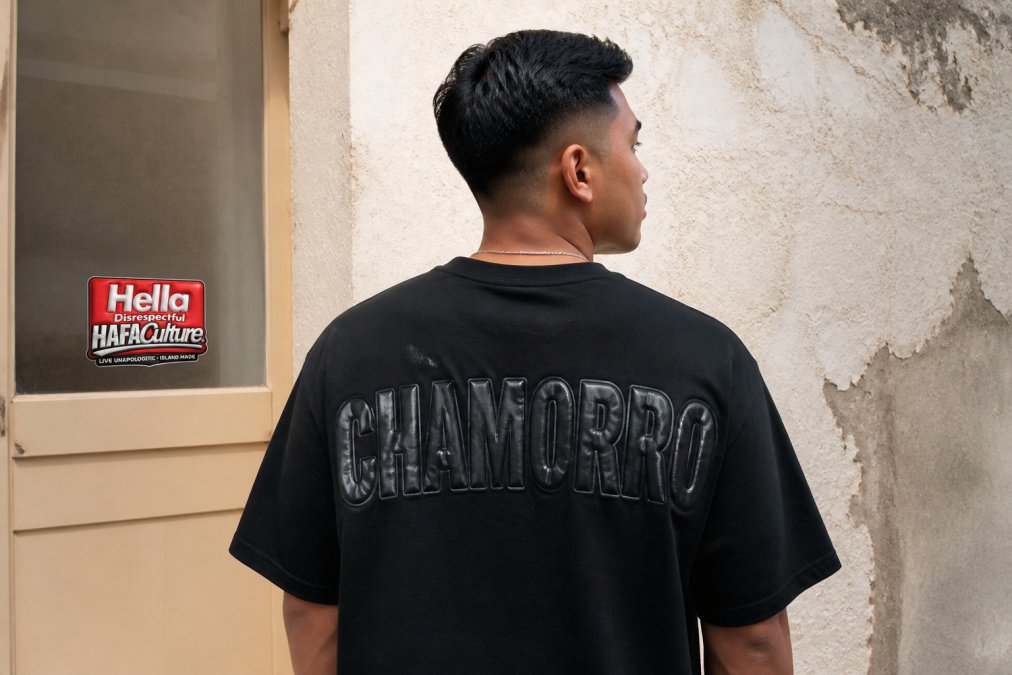
This is the highest-context setting, and full statement pieces work. A bold back graphic honoring island heritage fits the setting and invites conversation. At a fiesta, a village celebration, or a cultural festival, the expectation is visibility. Wear the latte stone, the island chain, the 671 mark. Layer with a Mestiza-inspired piece if the event calls for formal cultural dress.
Weddings and Formal Ceremonies
Weddings split into two categories. If the couple has requested traditional or cultural attire, a Mestiza dress or a formal barong-style piece is appropriate, and a subtle motif on a dress shirt or a small embroidered detail on a formal top works for guests. If the wedding is Western-formal with no cultural dress request, keep the cultural reference understated: a small motif, a coordinate detail, or an understated colorway.
Hafa Culture Puff Tee – Chamorro Edition →
Funerals and Memorial Services
This is the setting where most people get it wrong. Funerals in Chamorro families often carry deep cultural weight, and the dress code is typically dark, modest, and understated. A loud back graphic is not appropriate here. If you want to wear something culturally meaningful, choose a small, subtle motif, a muted colorway, or a piece worn underneath a jacket or cardigan.
Everyday Wear
A clean-front tee with a meaningful back design reads as personal style rather than costume. This is where most buyers live, and it's the safest zone for bold cultural graphics. Pair with denim, shorts, or a jacket. The piece does the talking.
Professional and Corporate Settings
Keep the cultural reference subtle: a small motif, a coordinate detail, or an understated colorway. A full back graphic at a client meeting reads as casual, not as cultural pride. If your workplace is business casual, a small chest logo or a subtle embroidered element is the ceiling. If it's business formal, save the cultural piece for after-hours.
A Quick Formality Ladder
| Setting | Cultural Reference Level | Example Piece |
|---|---|---|
| Fiesta / festival | High | Bold back graphic tee or Mestiza-inspired dress |
| Cultural wedding | Medium to high | Formal piece with motif, or subtle embroidered detail |
| Western-formal wedding | Low | Small motif, understated colorway |
| Funeral / memorial | Very low | Muted, subtle, or worn under a layer |
| Everyday | Medium | Clean-front tee with meaningful back design |
| Corporate | Low | Small chest logo or subtle detail |
The question often asked is whether wearing cultural apparel requires explaining it. It doesn't. A well-designed piece speaks for itself. The Guam Seal Puff Tee, for example, is minimal from the front and powerful from the back, which means you're not performing your identity, you're just wearing it, and you can adjust the context by how you layer it.
Textile and Material Sourcing for Authentic Cultural Apparel
Textile and material sourcing determines whether a cultural garment lasts long enough to mean something. The origin of fabric and print durability are important considerations.
Conclusion: Wear Your Culture Loud and Proud
Finding a brand that has researched motifs, respected the source, and built a quality garment can be challenging. That's the difference between wearing your heritage and wearing a trend.
Frequently Asked Questions
What was the cultural attire of the Chamorros?
Ancient Chamorro attire used materials from the island environment. Women wore skirts made from coconut fiber or bark cloth, often woven with geometric patterns. Men wore loincloths called chininan Chamoru, typically made from bark cloth or woven plant fibers. After Spanish colonization in the 17th century, clothing styles shifted toward Western-influenced garments like the mestiza dress for women, which blended indigenous, Spanish, and Filipino elements. Today, Chamorro cultural clothing includes both traditional ceremonial pieces and modern streetwear that incorporates ancestral motifs like latte stones and tribal patterns.
How can you distinguish authentic Chamorro designs from mass-produced apparel?
Authentic Chamorro cultural clothing often includes specific ancestral symbols like the latte stone, island silhouettes of Guåhan, and the 671 area code. Look for thoughtful design that respects the cultural context, not just random tribal patterns. Check if the brand shares information about the meaning behind the motifs and involves Chamorro artists or community members. Mass-produced items often use generic Pacific Islander imagery without proper attribution. Brands like Hella Disrespectful Clothing, for example, clearly explain the symbolism in their Hafa Culture series, which features the latte stone and navigation details, showing a commitment to authenticity.
Is it appropriate to wear Chamorro-inspired clothing if you are not of the culture?
Wearing Chamorro-inspired clothing as an outsider can be appropriate if done with respect and understanding. The key is cultural appreciation, not appropriation. Learn about the symbols and their meanings before wearing them. Avoid items that trivialize sacred motifs or are sold as generic 'tribal' fashion. Support brands that collaborate with and credit Chamorro artists. If you are wearing a piece with specific cultural significance, be prepared to explain its meaning if asked. The goal is to honor the culture, not treat it as a costume or trend.
What happens if you misinterpret symbols in cultural clothing design?
Misinterpreting symbols in cultural clothing design can lead to offense, misrepresentation, and the spread of misinformation. For example, using a latte stone without understanding its role as an ancestral pillar in Chamorro culture reduces it to decoration. This can disrespect the community and contribute to cultural erasure. If you are designing apparel, research each motif's origin and meaning. Consult with cultural experts or community members. When in doubt, choose designs that are clearly inspired by rather than claiming to be authentic reproductions, and always credit the source culture.