

DTG vs DTF Printing: Which Is Best for Your Apparel?
Table of Contents
- DTG vs DTF Printing: What Each Method Actually Does
- Head-to-Head Comparison: DTG vs DTF Printing at a Glance
- DTF Printing Durability: How Transfers Hold Up After Washing
- Best Fabric for DTF Transfers vs DTG Substrates
- DTG vs DTF Cost Analysis: Total Cost of Ownership
- Environmental Impact and Sustainability Considerations
- Hybrid Workflow Integration: Running DTG and DTF Together
- Which Printing Method Is Right for Your Custom Apparel?
- Frequently Asked Questions
Last Updated: September 1, 2026
DTG vs DTF Printing: What Each Method Actually Does
The DTG vs DTF debate is one of the most consequential decisions any custom apparel business will make. The difference between these two technologies goes far deeper than print quality or price: it comes down to substrate compatibility, workflow architecture, and total cost of ownership over months and years.
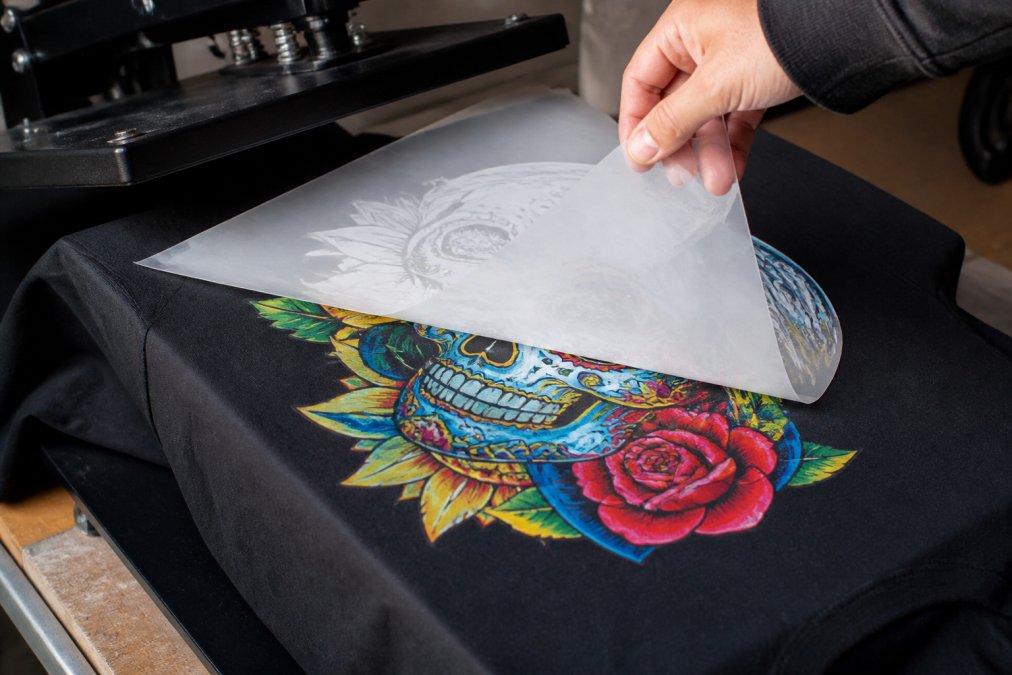
How Direct-to-Garment Printing Works
Direct-to-garment (DTG) printing deposits water-based inks directly onto finished garments using inkjet printheads. Dark garments require pre-treatment, a liquid solution sprayed onto fabric, then heat-cured to open fiber structure and create a bonding surface for ink. After printing, the garment is heat-cured to bond ink permanently to fibers.
The critical limitation: DTG works best on natural fibers, particularly 100% cotton. Synthetic fibers resist water-based inks, causing poor adhesion and dye migration where polyester dye bleeds into the white ink layer, creating a discolored appearance.
How Direct-to-Film Printing Works
Direct-to-film (DTF) printing prints designs onto clear PET film using specialized DTF inks with a white ink base layer, then coats with hot-melt adhesive powder. The powder is melted in a curing oven to bond with ink, creating a finished transfer that is heat-pressed onto the target garment.
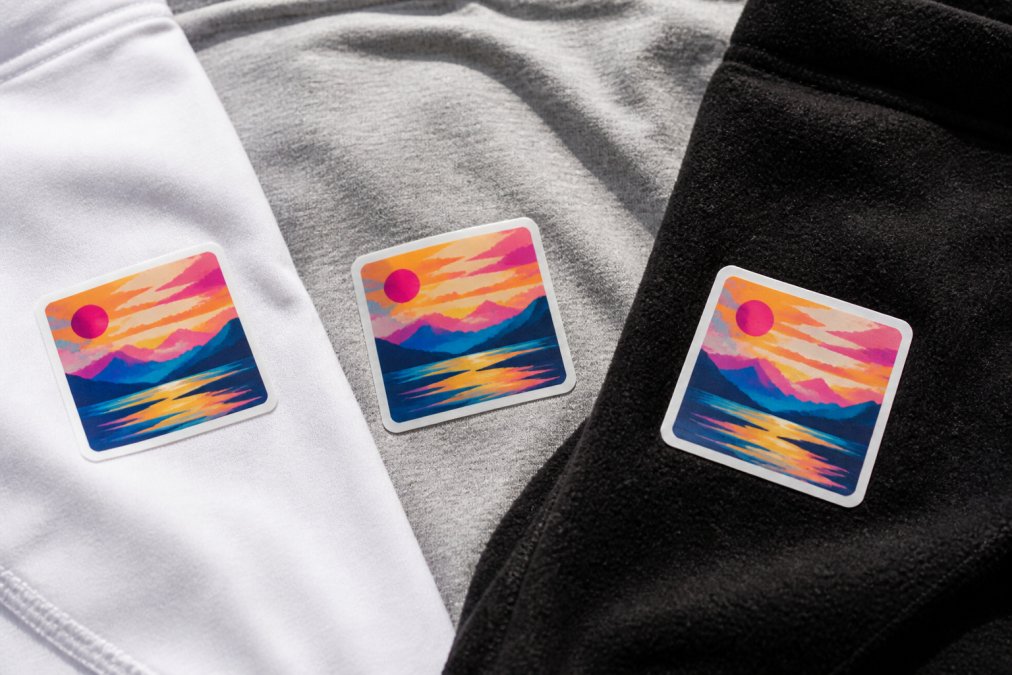
DTF decouples printing from garment application. Transfers are printed ahead of time, then pressed onto garments on demand. This separation creates operational flexibility DTG cannot match. There is no pre-treatment required, no platen loading per shirt, and no substrate restriction. DTF transfers adhere to cotton, polyester, nylon, leather, and blended fabrics equally.
Head-to-Head Comparison: DTG vs DTF Printing at a Glance
DTG wins on print softness and direct printing without a transfer layer. DTF wins on substrate versatility, production flexibility, and lower per-unit operational complexity.
| Feature | DTG | DTF |
|---|---|---|
| Substrate compatibility | Cotton, cotton blends | Cotton, polyester, nylon, leather, blends |
| Pre-treatment required | Yes (dark garments) | No |
| Post-processing equipment | Heat press or dryer | Shaker, curing oven, heat press |
| White ink layer | Printed directly | Part of transfer |
| Hand feel | Soft, ink-into-fiber | Slight transfer feel |
| Print resolution | Up to 1200 x 1200 dpi | Up to 1200 x 1200 dpi |
| On-demand printing | Yes (per garment) | Yes (transfers pre-made) |
| Color gamut | Wide, CMYK + white | Wide, CMYK + white |
| Best for | High-cotton, soft-hand prints | Multi-fabric, high-volume, varied substrates |
| Startup cost range | Higher per-machine | Varies by system size |
DTF Printing Durability: How Transfers Hold Up After Washing
Properly cured DTF transfers hold up well through repeated washing when applied correctly. The adhesive powder bonding process determines longevity. When hot-melt adhesive is fully melted and the heat press applies the right combination of temperature, pressure, and dwell time, the transfer bonds at a molecular level with fabric fibers.
DTF transfers fail prematurely due to three variables: under-cured adhesive powder, incorrect heat press settings, or poor-quality inks. An under-cured transfer will crack and peel within a handful of washes. DTG prints integrate ink directly into fiber, causing them to fade gradually rather than crack or peel. On cotton substrates with proper curing, DTG prints last for many years. On synthetic or blended fabrics, adhesion is weaker and fading accelerates.
Best Fabric for DTF Transfers vs DTG Substrates
DTG is most effective on 100% ring-spun cotton. Cotton-polyester blends at 50/50 or 60/40 ratios can work, but print quality degrades as polyester content rises. Dye migration becomes a real problem on high-polyester garments, particularly with white ink, because polyester dye activates under heat and bleeds into the white layer, creating a pinkish or grayish cast.
DTF transfers apply to virtually any fabric: polyester, nylon, performance blends, fleece, denim, canvas, leather, and some rigid materials. This substrate versatility is DTF's single biggest operational advantage over DTG.
- Best fabrics for DTF: 100% polyester, 100% cotton, 50/50 blends, nylon, fleece, denim
- Best fabrics for DTG: 100% cotton, high-cotton blends (80%+ cotton)
- Avoid with DTG: High-polyester fabrics, synthetic-dominant blends
- Avoid with DTF: Extremely textured surfaces, waterproof-coated fabrics
DTG vs DTF Cost Analysis: Total Cost of Ownership
Real cost analysis must account for ink consumption, maintenance downtime, consumables, and revenue impact of operational disruptions.
Startup Costs and Equipment
DTG printers range widely by capacity and brand. The Epson SureColor F2100 starts at $9,995 (epson.com). The Ricoh Ri 1000 starts at $14,499 (ricoh.com). Industrial options like the Brother GTXPro run from $7,000 used to $24,000-$25,000 new.
DTF systems require the printer plus a shaker and curing oven. The STS Inks XPD-924D starts at $24,995 and is often bundled with a shaker and supplies. DTG entry-level costs are lower for the printer alone. DTF total system costs are higher at entry but scale more efficiently at volume because per-transfer costs drop as throughput increases.
Maintenance, Downtime, and Operational Costs
DTG's true cost emerges in maintenance. White ink is thick and prone to clogging if machines sit idle. Printhead replacement is expensive. Daily maintenance routines are non-negotiable. Pre-treatment is an ongoing consumable cost for DTG that DTF eliminates entirely.
DTF printers face maintenance challenges around white ink circulation. Systems like the STS XPD-924D use continuous circulation to prevent clogging. The separate shaker and oven add mechanical components requiring upkeep, but these are simpler than precision inkjet printheads.
| Cost Factor | DTG | DTF |
|---|---|---|
| Equipment startup | Lower (printer only) | Higher (printer + shaker + oven) |
| Pre-treatment consumables | Required for dark garments | Not required |
| Printhead maintenance | High attention required | Moderate (white ink circulation) |
| Ink cost per print | Higher on dark garments | Consistent across substrates |
| Downtime risk | Higher (printhead clogs) | Lower with circulation systems |
Environmental Impact and Sustainability Considerations
DTG inks are water-based with lower VOC profiles than solvent-based alternatives. The Brother GTXPro uses inks certified under Oeko-Tex standard and holds GOTS Approval, meeting defined limits for harmful substances in textile applications (oeko-tex.com).
DTF inks include hot-melt adhesive powder, introducing a synthetic polymer. The environmental profile varies by formulation, and this area is less standardized than DTG ink certification.
Pre-treatment chemicals used in DTG carry environmental considerations. Proper handling and disposal following EPA guidelines for textile chemical waste is important.
On energy, DTF's curing oven runs continuously during production, adding energy consumption. At scale, batch processing efficiency in DTF can offset this.
Neither method is without environmental trade-offs. If sustainability is a core brand value, DTG with certified inks is currently the more documented choice.
Hybrid Workflow Integration: Running DTG and DTF Together
DTG and DTF are not mutually exclusive. Many operations run both, and hybrid workflows often outperform either method alone.
DTG handles soft-hand prints on 100% cotton where ink-into-fiber integration matters. DTF handles everything else: polyester, blends, hard-to-print substrates, and high-volume transfer production where pre-printing transfers creates fulfillment speed advantages.
A practical hybrid setup:
- DTG machine handles on-demand cotton prints for core catalog items
- Dedicated DTF system pre-prints transfer batches for poly-blend and synthetic pieces
- Heat press serves both workflows for final application
- Shared RIP software manages color profiles across both systems
The operational benefit is coverage without compromise. No substrate gets degraded print quality from forcing the wrong method onto it.
Which Printing Method Is Right for Your Custom Apparel?
Choose DTG if your catalog is predominantly 100% cotton, customers prioritize soft hand feel, and you're printing lower volumes where per-garment on-demand production makes sense.
Choose DTF if your catalog includes synthetic fibers, polyester blends, or any non-cotton substrate. DTF is also better if you need production flexibility, want to pre-print transfer inventory, or are scaling toward higher volumes where operational efficiency matters.
For custom apparel businesses printing across multiple fabric types without quality trade-offs, DTF is the more practical foundation. The question of which method produces "better" prints is less useful than which fits your actual production reality.
| Scenario | Recommended Method |
|---|---|
| 100% cotton catalog, soft hand feel priority | DTG |
| Mixed fabric catalog, polyester included | DTF |
| High-volume transfer pre-production | DTF |
| On-demand single garment printing | DTG or DTF |
| Limited startup budget, cotton only | DTG (entry-level) |
| Full apparel line across substrates | Hybrid DTG + DTF |
| Streetwear with bold, opaque graphics | DTF |
The real challenge in choosing between DTG and DTF is building a workflow that matches your actual production demands without locking you into a method that limits your catalog. Hella Disrespectful Clothing offers custom DTF printing services built for exactly this kind of flexibility, handling bold, full-color designs on heavyweight apparel that holds up through real use. If you want prints that speak for themselves without explanation, explore what custom DTF production can do for your brand. SHOP THE DROPS.
Frequently Asked Questions
Which lasts longer, DTG or DTF?
DTF printing durability generally edges out DTG on synthetic and blended fabrics because the adhesive powder creates a flexible bond that resists cracking. On 100% cotton, high-quality DTG prints with proper pre-treatment and curing can match DTF longevity. Both methods hold up well with cold-water washing and air drying. The bigger factor is print quality at the source, a well-cured DTF transfer or a properly pre-treated DTG print will both outlast a rushed job from either method.
Do customers prefer the feel of DTF or DTG prints?
Most customers describe DTG prints as softer because ink bonds directly into the cotton fibers, producing a more breathable hand feel. DTF transfers sit on top of the fabric, which some people notice as a slight texture, especially on large prints. That said, thinner DTF films have closed the gap considerably. For streetwear with bold, full-chest graphics, the difference is minimal in practice. Fabric weight and garment quality matter more to most wearers than the printing method itself.
Is DTG better than DTF for small-batch custom apparel?
For very small runs, one to five pieces, DTG is often more practical because there's no transfer film to prepare or cure separately. DTF becomes more efficient once you're producing transfers in batches, since you can print a full sheet of gang-run designs and press them on demand. For custom one-offs on 100% cotton, DTG's direct printing simplifies the workflow. For mixed fabric orders or designs that need to go on multiple garment types, DTF's substrate versatility makes it the stronger choice.
How do production costs compare between DTG and DTF?
DTG vs DTF cost analysis depends heavily on volume. DTG has higher per-print ink consumption on dark garments because a white ink layer is required under color inks, plus pre-treatment chemicals add to operational costs. DTF consolidates that into adhesive powder and transfer film, often at a lower per-transfer cost at scale. However, DTF requires a separate curing oven and shaker. Entry-level DTG machines start around $10,000; dedicated DTF setups can run from under $5,000 to over $25,000 depending on print width and speed.
Which printing method gives better color vibrancy on dark fabrics?
DTF printing consistently delivers stronger color vibrancy on dark fabrics. Because the design is printed onto film with a white ink layer built in, colors appear fully opaque regardless of garment color. DTG on dark garments requires pre-treatment and a white ink underbase, and if either step is inconsistent, vibrancy suffers. For bold, high-contrast graphics on black or navy apparel, the kind of designs that define streetwear, DTF's color gamut and opacity give it a clear practical advantage.
This article was written using GrandRanker