

How to Identify Authentic Streetwear: 2026 Guide
Table of Contents
- Why Authentic Streetwear Is Worth Protecting
- Signs of Counterfeit Clothing You Can Spot Immediately
- How to Spot Fake Streetwear Using Tags and Labels
- Logo Placement, Embroidery, and Print Quality
- Holographic Features, Serial Numbers, and Packaging
- Your Streetwear Authentication Guide for the Secondary Market
- What Authentic Streetwear Looks Like in Practice
- Frequently Asked Questions
Last Updated: September 2, 2026
Why Authentic Streetwear Is Worth Protecting
The streetwear resale market has grown into a multi-billion-dollar secondary market where counterfeit goods circulate alongside genuine pieces at nearly identical prices. Knowing how to identify authentic streetwear is no longer optional for serious collectors and everyday buyers alike. At Hella Disrespectful Clothing, we've seen firsthand how counterfeit culture erodes trust in independent brands that actually put craft and identity into every piece.
The counterfeit market doesn't just target big names, it targets any brand with enough cultural cachet to make a fake worth producing. Authentic streetwear is more than a garment. It's a verified expression of brand identity, cultural provenance, and material quality that counterfeit producers consistently fail to replicate at every level of scrutiny.
According to the U.S. Customs and Border Protection intellectual property rights report, counterfeit apparel and footwear consistently rank among the top seized counterfeit goods categories entering the country. This guide covers exactly what to look for, from stitching and seams to holographic security features, plus how to use modern digital authentication tools and navigate resale platform policies.
Signs of Counterfeit Clothing You Can Spot Immediately
Most counterfeit detection guides start with the obvious and stop there. The real skill is learning to read multiple signals simultaneously, because no single flaw confirms a fake on its own. A combination of issues tells a clear story.
Stitching, Seams, and Thread Quality
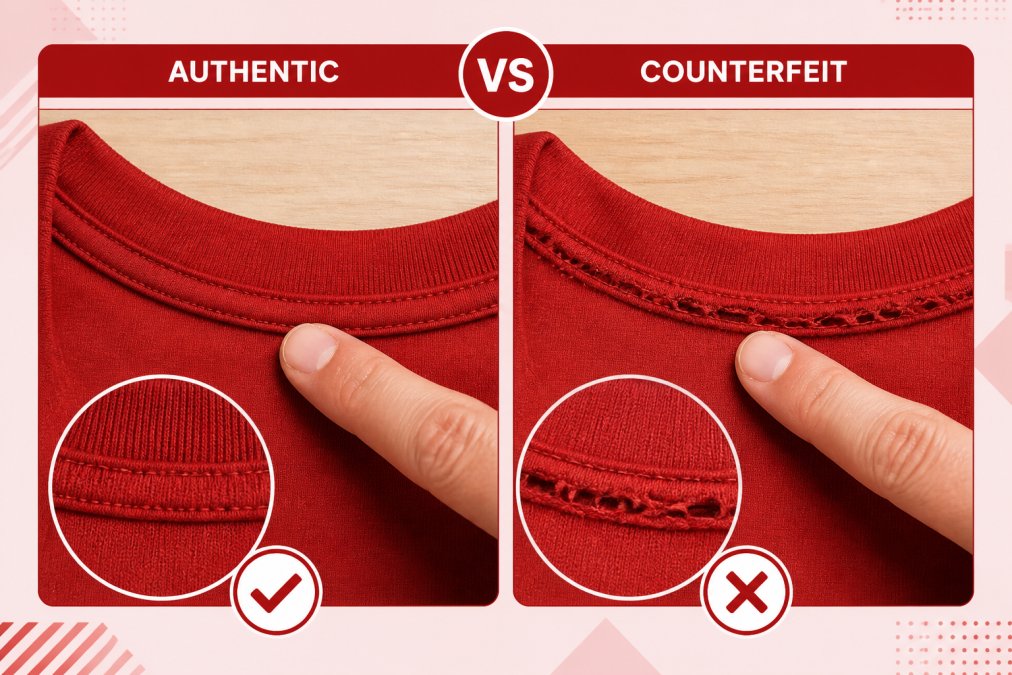
Stitching quality is the single most reliable indicator of authentic streetwear. Genuine pieces use consistent stitch counts per inch, with no loose threads, skipped stitches, or puckering along the seams. Run your finger along every seam, including the collar, armhole, and hem. If the fabric bunches or feels rough where it should lie flat, that's a problem.
Counterfeit manufacturers use lower-weight thread that frays faster and often mismatch the thread color to the base fabric. On dark garments, hold the seam up to direct light. Inconsistent thread color or varying stitch density along a single seam is a clear sign something is off. Double-stitched seams on the hem and sleeves are standard on quality streetwear. Check the interior seams too, authentic pieces finish them cleanly, while fakes often leave raw, fraying edges.
Fabric Weight, Texture, and Material Composition
Authentic heavyweight streetwear has a distinct density and drape that cheap counterfeit fabric cannot replicate. A genuine heavyweight tee holds its shape when you hold it by the collar. A counterfeit made from thin, low-grade cotton will stretch and distort immediately.
Check the wash tag for fiber content. Legitimate brands are specific: "100% combed ring-spun cotton" or precise blends. Counterfeit tags often list vague compositions or incorrect percentages. Combed ring-spun cotton has a smooth, soft hand feel with visible fabric density. Standard open-end cotton feels rougher and lighter. The real test is weight and structure, not surface texture alone.
How to Spot Fake Streetwear Using Tags and Labels
Tags and labels are where counterfeit producers make their most consistent mistakes. Authentic brands treat labeling as part of brand identity.
Neck Labels and Wash Tags
The neck label on authentic streetwear is sewn in with precision. The label sits flat, centered, and at a consistent height from the collar seam. Counterfeit neck labels frequently sit crooked, too high, or too low. Uneven stitching or label edges that aren't fully secured are immediate red flags.
Wash tags carry detailed care instructions, fiber content, country of manufacture, and an RN (Registered Number) or WPL number. The FTC Care Labeling Rule requirements for textile products requires that garments sold domestically include specific care instructions and fiber content. Authentic pieces comply precisely. Counterfeit wash tags often omit the RN number, list incorrect fiber percentages, or include grammatical errors.
Look at the print quality on wash tags. Authentic labels use clean, legible text with consistent ink density. Fakes often show blurry text, ink bleeding, or inconsistent font sizing.
Font Consistency and Typography Details
Authentic streetwear brands maintain strict font consistency across every label, tag, and printed element. The typeface used on the neck label should match the typeface on the wash tag and any printed branding on the garment itself.
Counterfeit producers frequently source labels from different suppliers, resulting in subtle but detectable font differences. Look for inconsistent letter spacing, slightly different character weights, or fonts that look similar but don't quite match the brand's established identity. Print quality on screen-printed or DTF-printed graphics should show sharp edges with no haloing, bleeding, or pixelation.
Logo Placement, Embroidery, and Print Quality
Logo placement is governed by brand standards that authentic manufacturers follow precisely. Chest logos typically sit at a specific measurement from the collar and shoulder seam. Counterfeit pieces place logos by approximation, producing inconsistencies that are easy to spot once you know what to measure.
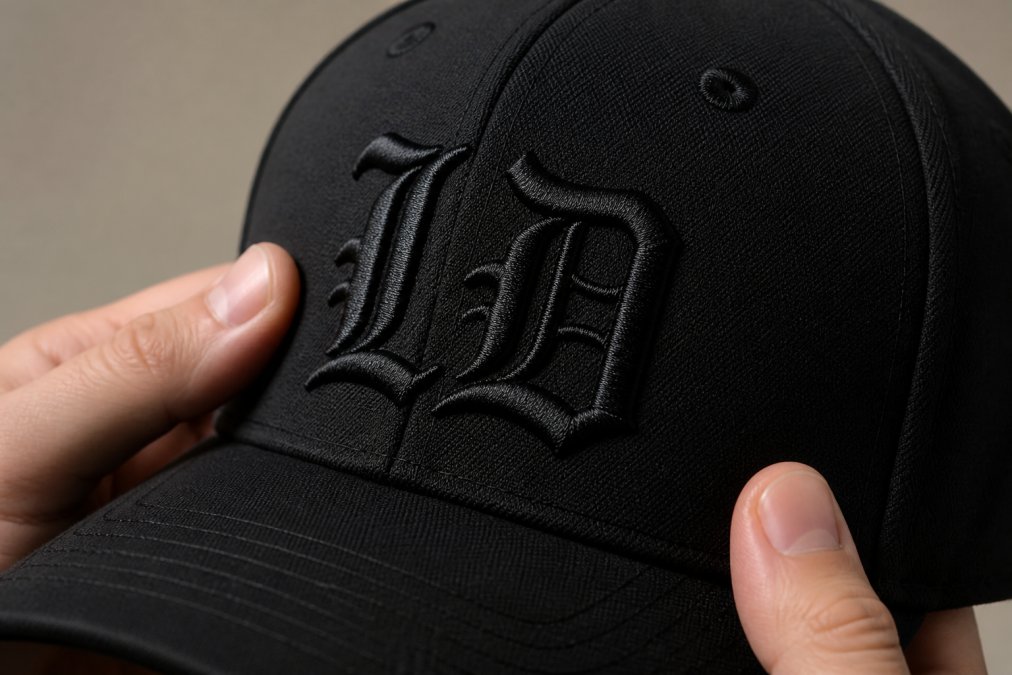
Embroidery quality tells its own story. On authentic pieces, embroidered logos show consistent stitch density, clean edges, and no loose thread ends. The backing material beneath the embroidery should be stable and not visible through the stitching. Counterfeit embroidery frequently shows uneven stitch density, untrimmed thread ends, and backing material that bleeds through the design.
The Live Unapologetic Snapback from Hella Disrespectful Clothing exemplifies quality embroidery. The "LIVE UNAPOLOGETIC" lettering uses high-quality embroidered construction with consistent thread tension and clean edges. Color accuracy in print graphics is another reliable indicator. Authentic brands maintain strict color standards. Counterfeit prints often show color shifts, washed-out tones, or oversaturated areas.

Holographic Features, Serial Numbers, and Packaging
Not every streetwear brand uses holographic security features, but many established labels and limited drops include them as anti-counterfeit measures. Holographic labels should show a clear, multi-directional color shift when tilted under light. Counterfeit holograms typically show a flat, single-color reflection or a blurry rainbow effect.
Serial numbers appear on hangtags, neck labels, or sewn-in labels on limited-edition pieces. Authentic serial numbers follow a consistent format matching the brand's documented numbering system. If you can cross-reference a serial number through a brand's official verification portal, do it. A serial number that doesn't return a valid result is a strong indicator of a counterfeit.
Packaging is frequently overlooked. Authentic streetwear arrives in branded packaging with consistent print quality, correct brand fonts, and no smearing or misalignment. Hangtags deserve close attention, check that the cardstock weight matches official examples, typography is consistent, and any QR codes scan to legitimate brand pages. A QR code that leads to a broken link is a clear counterfeit signal.
According to the International AntiCounterfeiting Coalition's resources on brand protection, security features like holograms and serialized labels are among the most effective deterrents against counterfeit goods in the apparel market.
Your Streetwear Authentication Guide for the Secondary Market
The secondary market is where authentication matters most and where counterfeits circulate most freely.
Resale Platform Policies and Legit Check Services
Resale platforms vary significantly in how they handle authentication. Some offer built-in authentication services for purchases above certain price thresholds, where trained reviewers inspect items before they ship to buyers. Others rely entirely on seller reputation and buyer dispute processes.
Before purchasing on any resale marketplace, check the platform's authentication policy explicitly. Understand what items qualify for authentication review, what the dispute process looks like if you receive a counterfeit, and whether the platform offers buyer protection. Independent legit check services exist as an alternative for high-value purchases, typically requiring macro-photography of specific authentication points.
Digital Authentication Tools and Macro-Photography Techniques
Digital authentication tools represent the most significant advancement in how buyers verify authentic streetwear. Several apps now use image recognition and database comparison to flag potential counterfeits. These tools are most effective when combined with human expertise.
Macro-photography is the skill that makes digital authentication work. Most buyers photograph garments from too far away to capture the details that matter. For effective authentication photography:
- Use your phone's portrait or macro mode to capture stitching at 1:1 scale
- Photograph neck labels and wash tags under direct light to reveal print quality
- Capture embroidery from a 45-degree angle to show thread depth and density
- Photograph holographic elements while slowly tilting the garment to capture the color shift
- Document logo placement with a ruler visible in the frame for scale
Counterfeit producers rely on buyers making quick visual assessments from normal viewing distance. They invest in getting the macro-level appearance right while cutting every corner at the micro level. Slowing down and getting close is the most effective countermeasure a buyer has.
| Authentication Point | What to Check | Counterfeit Red Flag |
|---|---|---|
| Stitching and seams | Stitch density, thread color match | Loose threads, uneven density |
| Fabric weight | Density, drape, light blocking | Thin, stretchy, light-permeable |
| Neck label | Placement, stitching, font | Crooked, loose edges, font mismatch |
| Wash tag | RN number, fiber content, care text | Missing RN, vague fiber listing |
| Logo placement | Measurement from seam, symmetry | Off-center, inconsistent height |
| Embroidery | Stitch density, thread ends, backing | Loose ends, visible backing bleed |
| Holographic features | Multi-directional color shift | Flat or blurry reflection |
| Serial number | Format consistency, verification | No match in brand database |
| Packaging | Print quality, paper stock, QR codes | Color inconsistency, broken QR |
What Authentic Streetwear Looks Like in Practice
Authentic streetwear doesn't just pass individual authentication checks. It passes all of them simultaneously, because genuine quality is consistent across every element of the garment.
Take the WANTED: MAC BEAR TEE from Hella Disrespectful Clothing as a concrete example. The heavyweight ring-spun cotton construction means the fabric weight check is immediate and obvious. The structured fit holds its shape under the collar grip test. The print quality on a genuine DTF piece shows sharp graphic edges with no haloing and a clean bond to the fabric surface. These are observable, verifiable characteristics that a counterfeit would fail to replicate across all points simultaneously.

A common mistake buyers make is accepting partial authentication. One clean check doesn't clear a garment. The standard should be every check passing. Provenance documentation also matters, knowing where a piece came from, having the original receipt or order confirmation, and being able to trace the chain of ownership adds a layer of authentication that no physical inspection can replicate. Sellers of genuine pieces typically have this documentation. Counterfeit sellers typically don't.
For buyers who want to start with verified authentic pieces, shopping directly from independent brands with transparent production standards is the lowest-risk entry point. The Hip Hippo Tee from Hella Disrespectful Clothing, built from 6.5 oz heavyweight fabric with a structured fit, gives buyers a verified baseline for what authentic construction feels like, which makes spotting fakes on the secondary market significantly easier.
Counterfeit streetwear costs buyers money and dilutes the cultural value of independent brands that actually build something meaningful. Hella Disrespectful Clothing produces heavyweight, authentic pieces with verifiable construction quality, from the ring-spun cotton fabric to the precision DTF printing and structured fit. Shop the drops at Hella Disrespectful Clothing and build your authentication instincts from a piece you can trust.
Frequently Asked Questions
What are the most common signs of counterfeit streetwear?
The most reliable red flags are uneven stitching, loose threads at seams, off-weight fabric that feels thin or stiff, and inconsistent font spacing on tags and graphics. Counterfeit pieces also tend to have blurry or faded print quality, incorrect color accuracy on logos, and packaging that looks generic rather than brand-specific. Checking wash tags for misspellings and verifying that neck labels match known brand identity details will catch most fakes quickly.
Is there an app to authenticate streetwear?
Several digital authentication tools exist for the secondary market. Platforms like Legit Check App allow users to submit photos for community or expert review, and some major resale marketplaces have built-in authentication programs for high-value drops. For the best results, combine app-based verification with your own macro-photography inspection, zoom into stitching, embroidery, and label typography before purchasing any limited-edition piece from a private seller.
How do stitching and fabric quality reveal fake streetwear?
Authentic streetwear uses consistent stitch counts per inch, tight seam construction, and ring-spun or combed cotton that holds structure after washing. Counterfeit garments cut costs by using lower thread counts, skipping double-stitching on stress points like sleeves and collars, and choosing lightweight fabric that loses shape quickly. A genuine heavyweight tee, typically 6 oz or more, should feel dense and structured in your hands before you even look at the label.
How can you verify the authenticity of limited-edition apparel on resale platforms?
Check whether the resale platform offers a built-in authentication guarantee before purchasing. Request multiple high-resolution photos from the seller: front and back of the garment, close-ups of all tags, the inside seam, and any holographic or serial number features. Cross-reference the serial number with the brand's official records when possible. Deadstock pieces should also arrive in original, undamaged packaging, any signs of repackaging are a strong indicator of a counterfeit.