

Unapologetic Street Style: 11 Fashion Tips That Speak Loud
Table of Contents
- What Unapologetic Street Style Actually Means
- How to Identify Authentic Streetwear (And Skip the Fakes)
- Streetwear Styling Tips for Beginners: Start With the Fit
- Master the Oversized Silhouette Without Drowning in Fabric
- Mix Textures and Bold Graphics Like You Mean It
- Dress for Self-Expression, Not for the Algorithm
- Custom DTF Printing for Clothing: Make It Yours
- Your Unapologetic Starter Kit: Build the Capsule
- Frequently Asked Questions
Last Updated: September 5, 2026
What Unapologetic Street Style Actually Means
Unapologetic street style is the practice of dressing for yourself first and everyone else second, prioritizing raw self-expression over trend compliance or external approval. It is an attitude applied to clothing, where the fit, the graphics, and the energy of the outfit communicate who you are before you say a word.
Most guides treat streetwear as a shopping list of hype items. The real foundation is psychological: confidence comes from wearing what aligns with your identity, not what the algorithm suggests.
How to Identify Authentic Streetwear (And Skip the Fakes)
Authentic streetwear carries specific markers that separate it from fast-fashion knockoffs: heavyweight fabric, structured fits, and original graphic design that reflects a genuine point of view. When you pick up a real piece, the material density and the quality of the print tell you immediately whether the brand invested in the product or just stamped a logo on a blank.

A common mistake is equating price with authenticity. Many brands charge premium rates for the same mass-produced blanks. Look for specifics: 100% combed ring-spun cotton, a 6.5 oz fabric weight, and construction that holds its shape after repeated washes. The Better Business Bureau guidance on product quality advises consumers to verify material claims before purchase, since mislabeling is common in apparel.
Streetwear Styling Tips for Beginners: Start With the Fit
The single most important rule for beginners: fit determines whether an outfit looks intentional or accidental. Before experimenting with bold graphics or layering, nail the proportions of a basic tee and pant combination.
Start with a structured, heavyweight tee that sits cleanly at the shoulders without clinging. Pair it with relaxed-fit jeans or cargo pants that break slightly at the shoe. This creates a balanced silhouette that reads as streetwear rather than sloppy.

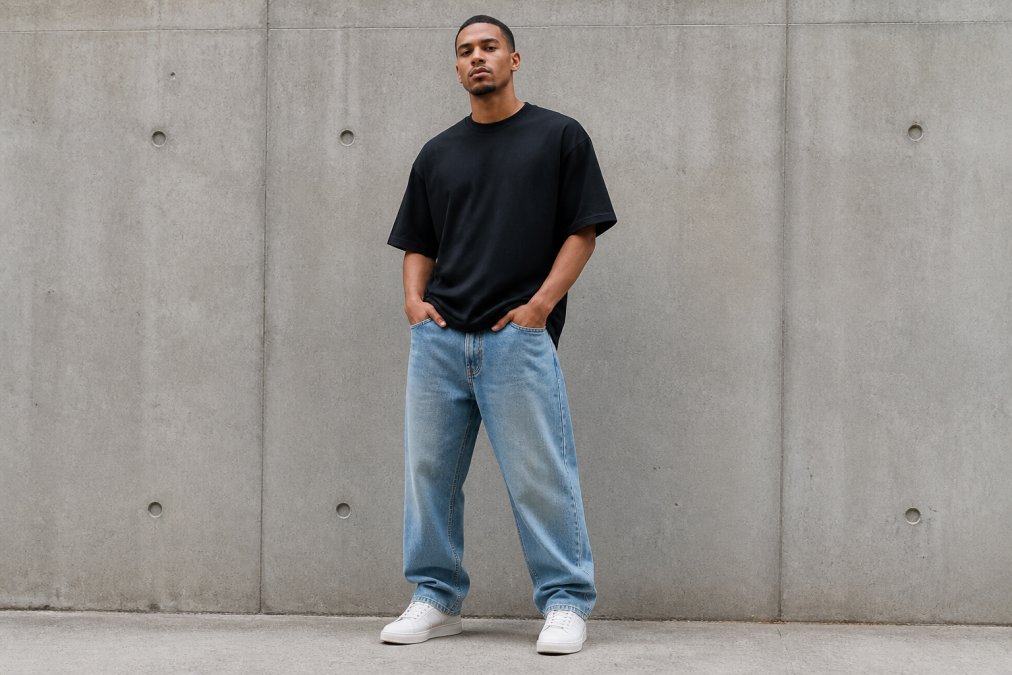
A proven progression for beginners looks like this:
- Master the basic tee-and-jean combo until the proportions feel natural.
- Add one statement accessory, such as a snapback, to test how bold you want to go.
- Introduce a single layered piece like an open flannel or overshirt.
- Experiment with graphics only after the foundation fits perfectly.
Master the Oversized Silhouette Without Drowning in Fabric
Oversized does not mean shapeless. The goal is a silhouette that looks deliberately voluminous, not like you borrowed a shirt two sizes too big. Balance proportions: if the top is oversized, the bottom should be more fitted or tapered, and vice versa.
A structured heavyweight tee with dropped shoulders creates that streetwear look while maintaining definition through the torso. Layer it under a cropped jacket or over a longer undershirt to add depth without bulk. The Vogue's street style coverage consistently shows that the most effective oversized looks hinge on contrast between volume and structure.
Mix Textures and Bold Graphics Like You Mean It
Texture is the quiet weapon of unapologetic street style, but most guides stop at 'mix different fabrics.' The real mechanism is visual weight: heavyweight cotton reads as solid and grounded; fleece as soft and bulky; technical nylon as sharp and utilitarian.
Bold graphics carry the attitude, but they work best when the rest of the outfit stays grounded. A loud graphic tee pairs well with matte black pants and clean sneakers; the print becomes the statement piece rather than competing with other patterns. Color blocking with complementary shades creates impact without clashing.
You do not need a $200 designer graphic tee to achieve this effect. Thrift stores are a goldmine for texture play: a vintage denim jacket, a worn-in flannel, or a technical shell from a decade ago provide the contrast you need at a fraction of retail cost. Hunt for fabric weight and construction, not labels.
For DIY texture modification, a few concrete techniques work well:
- Distressing denim: Use sandpaper or a pumice stone on the thighs and pockets of a thrifted denim jacket to create natural wear. Focus on the edges of pockets and the hem for a believable, not manufactured, look.
- Fabric paint for graphics: Instead of buying a new graphic tee, use fabric paint or textile markers to add your own design to a solid thrifted heavyweight tee. This gives you total control over the message and ensures no one else at the party is wearing the same print.
- Patchwork layering: Sew or iron-on patches from old band tees or local artists onto a plain canvas jacket. This creates a unique texture story and supports independent creators.
A common pattern is to pair a bold graphic with a single contrasting texture. A heavyweight graphic tee under a cropped technical shell jacket creates a juxtaposition between street-level graphics and futuristic utility. The graphic does the talking; the shell provides the structure.
For a larger build, texture contrast creates definition: a structured, heavyweight tee with a matte finish paired with a slightly textured cargo pant in a darker shade breaks up the silhouette without adding volume. For a slimmer frame, a textured layer like a fleece vest or waffle-knit long-sleeve under a graphic tee adds visual bulk.
The goal is not to look like a walking fabric sample book. Use texture as a tool to make the graphic and the message the focal point. One textured layer, one bold graphic, and one grounded base is the formula that consistently works. When you master that, experiment with two textures, but always keep the graphic as the anchor.
Dress for Self-Expression, Not for the Algorithm
The fastest way to kill your personal style is to dress for engagement metrics. Trend cycles on social media move faster than your wardrobe can keep up. Unapologetic street style is trend-defying by nature: it asks what you want to say, not what is currently being served to your feed.
Authenticity here means curating pieces that reflect your actual life, culture, and geography. For many of our customers, that means representing Chamorro heritage or Bay Area pride through designs that feel personal rather than gimmicky. When an outfit carries genuine meaning, you do not have to explain it; it speaks for itself. This approach aligns with what Psychology Today reports on fashion and identity describes as clothing's role in reinforcing self-concept.
Custom DTF Printing for Clothing: Make It Yours
Custom DTF printing for clothing is the process of transferring your own designs onto garments using Direct to Film technology, producing vibrant, durable prints that handle repeated washing without cracking or fading. This is how you move from wearing someone else's statement to making your own.
Quality varies significantly between providers. The common complaint with budget print-on-demand services is that prints peel or the garment deforms after a few laundry cycles. The difference comes down to the quality of the base garment and the integrity of the print process.
| Custom Printing Option | Best For | Key Considerations |
|---|---|---|
| Budget print-on-demand | One-off experiments | Thin fabric, print durability risks |
| Standard screen printing | Bulk orders, simple designs | Higher setup cost, limited color gradients |
| Custom DTF printing | Detailed designs, small batches | Vibrant color, durable on heavyweight cotton |
Your Unapologetic Starter Kit: Build the Capsule
A capsule wardrobe is a collection of versatile, quality pieces that mix and match effortlessly, and it is the practical backbone of unapologetic street style. The goal is quality over quantity: a few heavyweight staples that work together beat a closet of disposable trend pieces.
The common misconception is that an 'unapologetic' style is incompatible with a minimalist capsule. The bridge between maximalist self-expression and a functional wardrobe is intentionality. You are curating a set of statement pieces that all speak the same visual language, not limiting yourself to beige basics.
Start with these essentials, but note the specific role each piece plays in the system:
- Two heavyweight graphic tees that carry your core message or aesthetic. These are your primary statement pieces. Choose graphics that are meaningful to you, not just visually striking. One should be a 'loud' piece with a bold, full-front print; the other can be a more subtle, tonal graphic for days when you want the message to be quieter.
- One structured snapback to anchor casual outfits and add attitude. The hat is a utility piece for bad hair days and a visual anchor for the top half of your outfit. It should be a neutral color (black, navy, or camo) to work with every other piece in the capsule.
- One pair of relaxed-fit jeans or cargo pants in a neutral palette. This is your 'grounding' piece. It must be neutral (black, olive, or washed indigo) because it is the canvas for your louder tops. The fit should be relaxed but not sloppy, tapering slightly at the ankle to work with sneakers.
- One layering piece like a denim jacket or overshirt. This is your 'versatility multiplier.' A single layer can transform a graphic tee from a casual day look to a night-out outfit. Choose a texture that contrasts with your tees, like a rough denim or a smooth technical shell.
- One pair of clean, neutral sneakers that work with every combination. White, black, or a muted gray are the only options. These are the foundation of the entire outfit and must be kept clean to maintain the 'intentional' look.
The CFDA sustainability resources on wardrobe building notes that investing in fewer, higher-quality garments reduces waste and improves personal style consistency. This is where the capsule philosophy aligns with sustainability: you are buying less, but buying better. The goal is a rotation of five to seven pieces that can create at least ten distinct outfits. This is the practical definition of unapologetic style: you are not a slave to trends, and you are not a slave to a closet full of unworn clothes.

For a starter kit on a budget, prioritize the tee and the hat first; they carry the most visual weight for the lowest cost. Add the layering piece when you can, since it expands your outfit combinations significantly. Every piece should work with at least three others in your wardrobe.
A concrete test for your capsule is the 'three-outfit rule.' When you acquire a new piece, you must be able to create at least three distinct outfits using only the other items in your capsule. If you cannot, the piece does not belong. This prevents the accumulation of 'orphan' items that never make it into a rotation.
This approach is the missing bridge between the 'unapologetic maximalism' you see on social media and the functional reality of a weekly routine. The capsule is not a constraint; it is the structure that allows your boldest pieces to shine.
Frequently Asked Questions
What is the 3-3-3 rule in fashion, and does it apply to street style?
The 3-3-3 rule is a styling method where you build an outfit from just three clothing items, three accessories, and three colors. It works for unapologetic street style because it forces you to commit to a strong central piece, like a bold graphic tee or an oversized jacket, without cluttering the look. Start with one statement item, then build around it using the rule to keep your outfit intentional and sharp.
How do you style oversized pieces without losing your silhouette?
Balance is everything. If you wear an oversized hoodie or jacket on top, keep your bottom half fitted with straight-leg or tapered pants. If you go baggy on the bottom, pair it with a more structured top. The goal is to create visual contrast so the oversized piece reads as a deliberate style choice, not a sizing mistake. Adding a fitted hat or structured sneakers also anchors the look.
What does it mean to have an unapologetic fashion sense?
It means you dress for yourself first. You choose pieces because they reflect your identity, your culture, or your mood, not because they are trending or because you want approval. Unapologetic style skips the explanations. When you wear a piece that speaks for itself, like a heavyweight tee with bold graphics, you do not need to justify why you are wearing it. The outfit does the talking.
How can I use custom apparel to define my personal style?
Custom apparel lets you wear designs no one else has. Instead of picking from what stores offer, you create what represents you. Custom DTF printing for clothing lets you put your own graphics, slogans, or cultural references on quality blanks. This gives you full control over your visual identity and guarantees your style remains authentic to you, not a copy of someone else's feed.
Dressing unapologetically means rejecting the pressure to justify your choices, but it requires a foundation of quality pieces that hold up to real life. Hella Disrespectful Clothing delivers that foundation with heavyweight, structured apparel and custom DTF printing services that let you put your own voice on fabric. Start with the Live Unapologetic Snapback or a premium heavyweight tee, and build from there. Get started with Hella Disrespectful Clothing and make your style speak loud.