

Where America's Day Begins: Guam Explained
Table of Contents
- Where America's Day Begins: The Geographic Story
- The International Date Line and Why Guam Gets the First Sunrise
- What Is the Meaning of Hafa Adai in Chamorro Culture
- Chamorro Cultural Traditions and Island Identity
- Time Zone Differences: How Guam Stays Ahead
- Tourism and Strategic Importance in the Pacific
- Representing Guam Pride Through Authentic Apparel
- Frequently Asked Questions
Last Updated: October 1, 2026
Where America's Day Begins: The Geographic Story
Guam sits at the edge of the world, literally. Located in the Western Pacific Ocean, approximately 3,800 miles west of California, this US territory holds a distinction that few places on Earth can claim: it's where America's day begins. The island's position just west of the International Date Line means that when the sun rises over Guam's waters, it rises on American soil before anywhere else in the nation. This geographic reality has shaped Guam's identity, culture, and strategic importance for over a century.
At 13.4°N latitude and 144.8°E longitude, Guam is the westernmost point of the United States, serving as a geographic marker that defines an entire time zone and gateway between the continental US and Asia.
The island's strategic location in the Pacific region has made it a critical hub for military operations, tourism, and cultural exchange. But beyond the geopolitics and travel logistics, Guam represents something deeper: a place where indigenous Chamorro heritage meets modern American identity, where ancient traditions continue to thrive despite centuries of external influence.
The International Date Line and Why Guam Gets the First Sunrise
The International Date Line is an imaginary boundary running roughly along the 180th meridian of longitude, separating one calendar day from the next. To the west of this line, it's already tomorrow. To the east, it's still today. Guam sits just west of this line, which is why the island experiences sunrise before the contiguous states, sometimes by as much as 16 hours, depending on daylight saving time adjustments on the mainland.
This scientific reality has become embedded in Guam's identity. The phrase "where America's day begins" isn't just marketing, it's a geographic fact rooted in how Earth's rotation and the International Date Line work together. When it's 6 AM in Guam, it might still be 2 PM the previous day in California. This time difference creates a unique relationship between the island and the rest of the nation, one that affects everything from business operations to how Guam experiences global events.
Guam operates on Chamorro Standard Time (ChST), UTC+10, placing it a full day ahead of the eastern seaboard and 17 hours ahead of the Pacific coast. This means Guam literally experiences tomorrow first, a distinction central to how the island markets itself and residents understand their place in the world.
What Is the Meaning of Hafa Adai in Chamorro Culture
Hafa Adai, the traditional Chamorro greeting meaning roughly "how are you," represents a philosophy of respect, hospitality, and genuine human connection, an invitation to share in community and establish relationships grounded in mutual respect.
With ancient roots predating Spanish colonization, Hafa Adai survived centuries of cultural pressure and remains a greeting that carries weight, intention, and cultural pride.
Hafa Adai became a symbol of cultural resilience during periods of language suppression and remains central to younger generations reclaiming their heritage and challenging colonial-era cultural erasure.
The greeting appears in modern contexts across the island, from business signage to social media, from tourism marketing to everyday conversation. For Hella Disrespectful Clothing, incorporating Hafa Adai into designs like the Guam Coordinates Tee represents more than aesthetic choice, it's a commitment to authentic cultural representation. When the brand features "Hafa Adai" alongside GPS coordinates and island imagery, it's acknowledging that Guam's identity is inseparable from its Chamorro roots.

Chamorro Cultural Traditions and Island Identity
The Chamorro people have inhabited Guam for over 3,500 years, forming one of the oldest continuous Pacific cultures. Their traditions, language, and values remain foundational to island identity despite Guam's evolution into a modern, multicultural US territory.
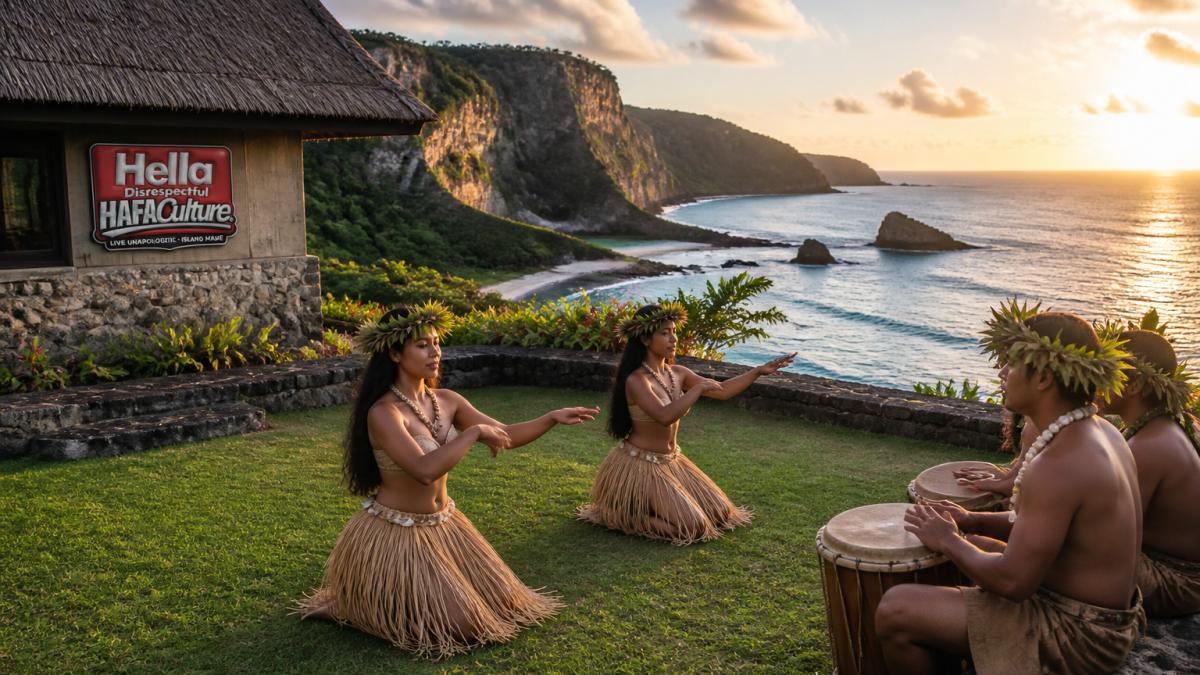
The concept of inafa'maolek ("living in harmony") guides Chamorro approaches to relationships and conflict resolution, emphasizing cooperation, respect for elders, and collective good. These values persist in modern communities, shaping family interactions, business operations, and how the island approaches challenges.
The Chamorro language faced decades of suppression, with children punished for speaking it in schools. A cultural revitalization movement over the past two decades has brought language immersion programs, cultural centers, and community initiatives to ensure future generations can speak and take pride in their heritage.
Traditional dishes like kelaguen (spiced raw fish salad) and red rice, Chamorro music blending Spanish guitar with Pacific rhythms, and fiestas honoring patron saints all express Chamorro culture and connect modern communities to their heritage.
Guam Coordinates Tee— “Where America’s Day Begins” →
For individuals of Chamorro heritage, especially those living on the mainland, cultural expression through clothing has become increasingly important. Brands like Hella Disrespectful Clothing recognize this need and create pieces that allow Chamorros to carry their identity with them. The CHAMORRO ISLAND STRENGTH TEE is designed for people who want to wear their heritage boldly, without apology, as a statement of cultural pride and resilience.

Time Zone Differences: How Guam Stays Ahead
Guam operates on Chamorro Standard Time (ChST), which is UTC+10, ten hours ahead of Coordinated Universal Time. This places the island significantly ahead of the continental United States. When it's noon in Guam, it's 8 PM the previous day on the East Coast and 5 PM the previous day on the West Coast. These time differences create practical challenges for anyone doing business, maintaining relationships, or coordinating across the Pacific.
The time zone advantage that makes Guam "where America's day begins" also creates unique logistical considerations. For businesses operating across multiple time zones, Guam's position means that island-based operations often serve as a bridge between Asian markets and American ones. Financial transactions, customer service operations, and data processing can begin in Guam while the mainland is still sleeping, creating a continuous workflow across the Pacific region.
For travelers, the time difference can be disorienting. Flying west to Guam, you gain a full day, you might leave California on Monday morning and arrive in Guam on Tuesday evening, even though only about 14 hours have passed. The reverse journey west to the mainland involves "losing" time, which many travelers find even more confusing. Understanding this temporal shift is essential for planning activities, managing jet lag, and coordinating with people back home.
The strategic value of Guam's time zone extends beyond business. For military operations and government coordination, Guam's position means that the island can monitor Pacific region activities while the mainland conducts daytime operations. This geographic-temporal advantage has been part of Guam's strategic importance since World War II.
Tourism and Strategic Importance in the Pacific
Guam has become one of the Pacific's most significant tourism destinations, attracting hundreds of thousands of visitors annually from Asia, North America, and beyond. The island's appeal combines natural beauty, pristine beaches, diving sites, and lush tropical landscapes, with cultural attractions and modern amenities. For many travelers, especially from Japan and South Korea, Guam represents an accessible gateway to Pacific island culture and American territory.
The tourism industry has shaped modern Guam's economy and infrastructure. Hotels, restaurants, and attractions have been developed to accommodate international visitors while attempting to preserve the island's natural environment. But tourism also creates tension: the influx of visitors and external cultural influences can dilute local traditions and create economic dependency on external markets.
Guam's strategic importance extends far beyond tourism. The island hosts significant US military installations, including Naval Base Guam and Andersen Air Force Base. These facilities make Guam a critical hub for Pacific defense strategy and regional stability. The military presence has shaped the island's economy, infrastructure, and demographic composition for generations.
The geopolitical significance of Guam has intensified in recent years as regional tensions have increased.
Representing Guam Pride Through Authentic Apparel
For people of Chamorro heritage and those connected to Guam, wearing apparel that authentically represents island identity has become a powerful form of cultural expression. Authentic representation matters, it's the difference between clothing that celebrates genuine culture and designs that reduce complex heritage to aesthetic trends.
| Aspect | Details | Significance |
|---|---|---|
| Geographic Position | 13.4°N, 144.8°E | Westernmost US location |
| Time Zone | Chamorro Standard Time (UTC+10) | 16-17 hours ahead of mainland |
| International Date Line | West of 180° meridian | First to experience each new day |
| Cultural Language | Chamorro, including "Hafa Adai" | Symbol of heritage and identity |
| Strategic Value | Military installations, Pacific hub | Regional defense and stability |
| Tourism Industry | Hundreds of thousands annually | Economic driver and cultural exchange |
Frequently Asked Questions
Why is Guam called 'Where America's Day Begins'?
Guam earns this slogan because it sits just west of the International Date Line in the Western Pacific Ocean. Due to its longitude and time zone positioning, Guam experiences sunrise before the contiguous states. As a US territory, it's the first place on American soil where each new day arrives, making it literally where America's day begins.
What is the meaning of Hafa Adai?
Hafa Adai is a Chamorro greeting meaning roughly 'how are you,' or more broadly 'hello' and 'welcome.' It reflects the Chamorro spirit of hospitality and community. The phrase embodies the island's cultural values of respect, connection, and warmth, core principles that define Chamorro cultural traditions and daily life in Guam.
How does the International Date Line affect Guam's time zone?
The International Date Line runs east of Guam, placing the island on the western side where time is ahead of the mainland. Guam operates on Chamorro Standard Time, which is UTC+10. This positioning means Guam experiences each calendar day before the rest of the United States, reinforcing its 'Where America's Day Begins' identity.
What makes Chamorro culture significant to Guam's identity?
Chamorro people are the indigenous inhabitants of Guam, and their cultural heritage forms the foundation of island identity. Chamorro cultural traditions, including language, navigation practices, spiritual beliefs, and community values, shape everything from daily greetings to governance. Understanding Chamorro perspectives is essential to respecting what Guam truly represents beyond its geographic or strategic importance.