

7 Ways to Build a Local Clothing Brand
Table of Contents
- 1. Research Your Local Clothing Market and Competitors
- 2. Define Your Target Audience and Ideal Buyer
- 3. Develop a Distinctive Brand Identity That Stands Out
- 4. Create a Clothing Brand Business Plan and Set Goals
- 5. Design Garments and Choose Production Methods
- 6. Understand Clothing Brand Startup Costs and Pricing Strategy
- 7. Build Your Marketing Strategy and Local Customer Base
- Local Clothing Brand Examples That Work
- Frequently Asked Questions
Last Updated: October 9, 2026
1. Research Your Local Clothing Market and Competitors
Building a successful local clothing brand starts with understanding what already exists in your community. Before you design a single garment, spend time studying the competitive landscape. Who's already selling in your neighborhood? What gaps do you see in their offerings?
Visit local boutiques, check out what's selling at street fairs, and follow regional influencers on social media. Notice what designs resonate with people around you. Are there cultural references, local pride elements, or community stories that aren't being told through apparel yet? This is where your opportunity lives.
At Hella Disrespectful Clothing, we built our brand by recognizing that communities like the Bay Area, Vallejo, and Guam had rich stories that deserved bold representation. We didn't just guess what people wanted, we listened to what was missing.

Talk to people in your community directly. Ask them what they wish existed in local fashion. What would make them proud to wear? Document these conversations. They'll inform everything from your design choices to your marketing strategy later.
2. Define Your Target Audience and Ideal Buyer
Your target audience isn't "everyone who likes clothes." It's specific people with specific values, interests, and reasons to buy from you.
Start by asking: Who do I want wearing my brand? Are you designing for Bay Area residents who want regional pride? For young professionals who value authenticity over mainstream trends? For people of a specific cultural background seeking representation?
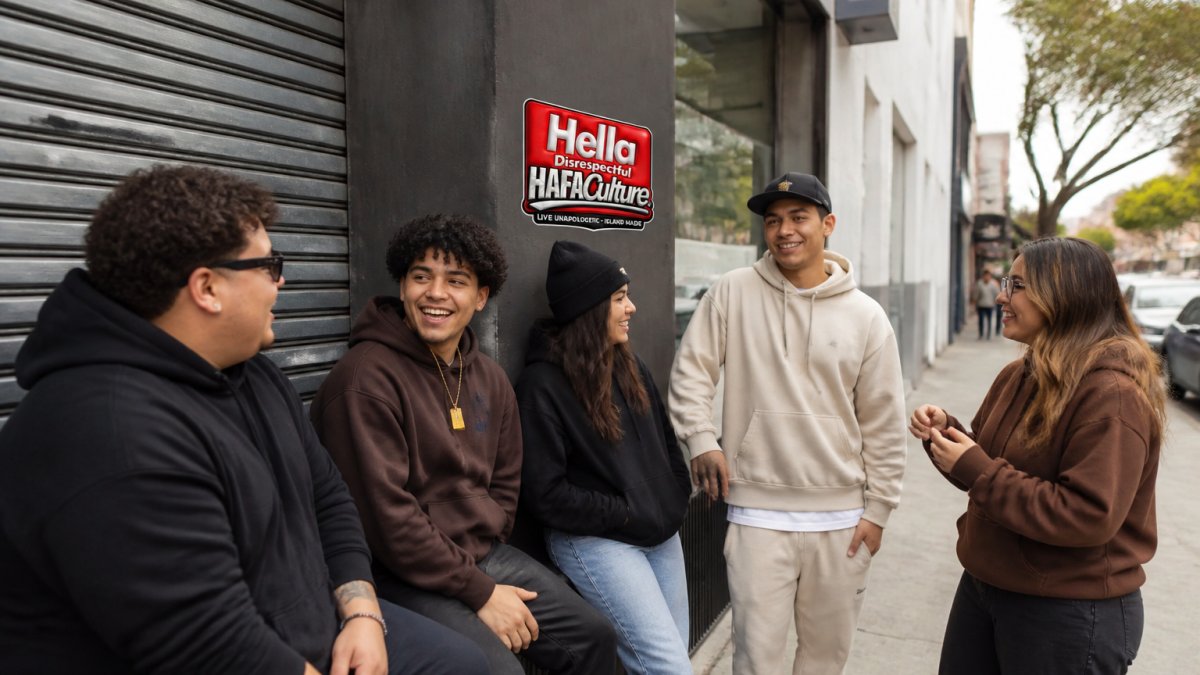
Once you define your ideal buyer, understand their pain points. What frustrates them about existing clothing options? What values matter most to them? Are they willing to pay more for quality and authenticity? Do they shop online or prefer in-person experiences?
Your ideal buyer is the person who sees your brand and immediately feels like it was made for them. They don't need convincing, they need you to exist.
3. Develop a Distinctive Brand Identity That Stands Out
A distinctive brand identity is what makes your local clothing brand memorable. It's your logo, your color palette, your tone of voice, and the story you tell about why you exist.
Start with your brand story. Why did you start this brand? What's the truth behind it? Authenticity is what cuts through the noise. People can smell a manufactured brand from a mile away.
Your visual identity, logo, colors, typography, should reflect your brand's personality. If you're bold and unapologetic, your designs should feel that way. If you're celebrating cultural heritage, your visual language should honor that.
A strong brand identity also includes your voice. How do you talk to customers? Are you formal or casual? Playful or serious? Direct or poetic?
Don't try to appeal to everyone. The brands that stand out are the ones with clear opinions and a specific point of view. That's what makes them worth talking about.
4. Create a Clothing Brand Business Plan and Set Goals
A clothing brand business plan doesn't need to be 50 pages. It needs to be honest and realistic.
Start with your goals. What do you want to achieve in year one? Be specific: "Sell 500 units" beats "become successful." Set goals for revenue, units sold, social media reach, and customer acquisition.
Next, outline your business structure. Will you operate as a sole proprietorship, LLC, or something else? You'll need to register your business and understand the legal requirements in your state.
Map out your sales channels. Will you sell online only? In-person at local markets? Through a physical location? Each channel requires different strategies and costs. A realistic business plan acknowledges these trade-offs.
Include a simple financial projection. Estimate your startup costs, monthly operating expenses, and potential revenue. You don't need perfect numbers, you need realistic ones.
Your business plan is a living document. Review it quarterly and adjust based on what you're learning. Goals change as you grow, and that's fine.
5. Design Garments and Choose Production Methods
Design comes down to one question: What story do you want your garments to tell?
For a local clothing brand, your designs should reflect your community. This could mean incorporating local landmarks, cultural symbols, regional pride, or the values your community cares about.
Start simple. Don't launch with 20 styles. Pick 3-5 core designs that represent your brand. These become your foundation. As you grow, you can expand, but early on, focus beats variety.
When choosing production methods, you have options. Screen printing is traditional and affordable for larger runs. Direct-to-film (DTF) printing offers flexibility and quality for small batches without high minimums. Embroidery adds premium appeal.
For small-batch production, DTF printing is worth considering. Services like Hella Disrespectful Clothing's Custom DTF Gang Sheets start at $14 per sheet, letting you stack multiple designs and keep costs low while maintaining high-quality, fade-resistant prints.

Choose materials that match your brand promise. If you're positioning as high-quality, use heavyweight cotton or premium blends. If sustainability matters to your community, source accordingly. Your material choice communicates quality to customers and affects durability.
6. Understand Clothing Brand Startup Costs and Pricing Strategy
Startup costs vary wildly depending on your approach, but here's what you actually need to budget for:
Initial Design and Setup: Logo design, artwork creation, and design files typically run between $200-$1,000 depending on whether you DIY or hire a designer.
Business Registration and Licensing: LLC formation and business licenses vary by state but generally cost $100-$500.
Hogan High “Vallejo Originals” Tee →
First Production Run: This is your biggest variable. A small test batch of 50-100 shirts using DTF printing might cost $500-$1,500 total. Larger runs through traditional screen printing could cost more upfront but per-unit costs drop.
E-commerce Setup: Website hosting, domain, and basic e-commerce platform: $100-$300 for the first year.
Marketing and Launch: Budget $200-$500 for initial social media ads, local event sponsorships, or influencer partnerships.
Realistic Minimum: You can launch a local clothing brand for $1,500-$3,000 if you start lean.
On pricing, your goal is to cover costs and build margin. If a shirt costs you $8 to produce and you want 50% margin, you'd price it at $16. But market positioning matters too.
Look at what your target audience is already paying for similar products. Price too low and you look cheap. Price too high and you price yourself out of your market.
7. Build Your Marketing Strategy and Local Customer Base
Your marketing strategy should focus on where your ideal customer already spends time.
For a local clothing brand, in-person community presence matters. Set up at local markets, street fairs, and community events. People want to see and feel the garment before buying.
Social media is essential, but be strategic. Focus on one or two platforms where your audience actually hangs out.
Email marketing builds customer loyalty. When someone buys from you, capture their email. Send them updates about new drops, behind-the-scenes content, and exclusive offers.
Partnerships amplify your reach without big ad budgets. Partner with local businesses, complementary brands, or community organizations.
Influencer partnerships work if they're authentic. Find micro-influencers in your community (people with 5K-50K followers) who genuinely align with your brand. Offer them a free shirt and see if they want to collaborate.
Track what's working. Monitor which marketing channels bring customers, which designs sell fastest, and what your customers are saying about your brand. Use this data to do more of what works.
Local Clothing Brand Examples That Work
The strongest local clothing brands share common traits: they're rooted in community, they tell authentic stories, and they maintain quality standards.
Vallejo Pride Designs resonate because they honor specific local history. The Hogan High "Vallejo Originals" Tee ($25) and Vallejo High "Vallejo Originals" Tee ($25) aren't just shirts, they're tributes to school traditions and hometown memories.

Bay Area Regional Pride works when it captures the unmistakable energy of a place.
Cultural Identity Apparel succeeds when it goes deeper than surface-level aesthetics.
Multi-Community Representation like the Pacifika Culture Tee ($25) connects people across Polynesia, Melanesia, and Micronesia through shared voyaging heritage and ocean culture.
What makes these examples work: they're specific to real communities, they maintain high production quality, and they price fairly. They don't apologize for their identity.
| Approach | Best For | Key Success Factor |
|---|---|---|
| Local school/alumni pride | Established communities with shared history | Authentic connection to real memories |
| Regional identity | Cities and regions with distinct culture | Specific visual language that's immediately recognizable |
| Cultural representation | Communities seeking authentic identity expression | Deep respect for heritage, not surface decoration |
| Multi-community themes | Diaspora and connected cultures | Recognition of shared values across regions |
Building a local clothing brand is achievable if you start with research, stay authentic, and focus on quality.
At Hella Disrespectful Clothing, we've seen that bold, unapologetic apparel rooted in real community pride outperforms generic streetwear every time.
Start small, test your designs, and listen to your customers. Your community is waiting for a brand that represents them. The Small Business Administration's guide to starting a business provides resources for registering your business and understanding legal requirements. SCORE's mentoring and resources for entrepreneurs offers free guidance on business planning and strategy. The FTC's guidelines on endorsements and testimonials ensure your marketing stays compliant as you grow.
Get started with Hella Disrespectful Clothing's Custom DTF Gang Sheets ($14 for a 12.5" x 54" sheet) to test your designs without large minimums.
Frequently Asked Questions
How much does it cost to start a local clothing brand?
Startup costs for a local clothing brand range from $500 to $5,000 depending on your approach. A minimal budget ($500-$1,000) covers basic design tools, simple inventory, and local marketing. Mid-range ($2,000-$3,500) includes small-batch production, quality materials, and professional branding. For custom DTF printing services like those offered by Hella Disrespectful, gang sheets start at $14.00, with single prints from $2.00 to $8.00, making it affordable to test designs before committing to larger orders.
What makes a local clothing brand stand out from competitors?
A local clothing brand succeeds by authenticity, community connection, and distinctive design. Focus on what your community actually cares about, regional pride, cultural heritage, or local values. Avoid generic designs that could belong to any brand. Instead, create pieces that tell a specific story. For example, designs that represent your hometown's history, cultural identity, or neighborhood pride resonate far more than mass-produced alternatives. Quality matters too: invest in durable materials and professional printing that lasts through multiple washes.
How do I market a clothing brand on a tight budget?
Effective low-budget marketing focuses on community and social proof rather than paid ads. Start with local partnerships: pop-up shops, community events, and in-person selling at local restaurants or venues. Build on social media by sharing behind-the-scenes content, customer photos, and the story behind your designs. Email marketing costs nothing and builds direct customer relationships. Ask satisfied customers for reviews and referrals. Local influencers and community leaders often collaborate for exposure rather than payment. Consistent, authentic engagement beats expensive advertising.
What should a clothing brand business plan include?
A solid clothing brand business plan covers: your brand story and positioning, target market research, competitive analysis, product line and design strategy, production and supplier details, startup budget and financial projections, pricing strategy and profit margins, sales channels (online, retail, in-person), and a 12-month marketing plan. Include specific goals for inventory, revenue, and customer acquisition. Define your unique value, what makes your brand different. For a local brand, emphasize community connection, cultural authenticity, or regional identity. Your plan doesn't need to be lengthy; focus on clarity and realistic numbers.
Is small-batch production better than bulk ordering for a new clothing brand?
Small-batch production is ideal for new brands because it reduces risk and cost. Ordering 50-100 units instead of 500 lets you test designs without overcommitting capital. You can adjust based on customer feedback before scaling. Custom DTF printing services like gang sheets ($14.00 to $65.00 depending on size) allow you to produce limited quantities affordably. Small batches also create scarcity and urgency, which drives sales. Once you've proven demand and refined your designs, you can move to larger production runs. This approach also supports sustainable practices and reduces waste.