

Are Matching Streetwear Sets Worth It? A 2026 Review
Table of Contents
- The Real Cost of Matching Streetwear Sets
- How to Style Streetwear Matching Sets
- The Versatility of Matching Apparel
- Fabric Quality and Longevity
- Sizing and Fit Challenges
- Capsule Wardrobe Integration
- Conclusion
- Frequently Asked Questions
Last Updated: September 22, 2026
The Real Cost of Matching Streetwear Sets
Are matching streetwear sets worth it? For most people building a wardrobe, yes, with one condition: buy for versatility, not hype. A two-piece outfit that works as separates earns its keep. A set that only looks right head-to-toe is a costume you'll wear twice.
This guide from Hella Disrespectful Clothing breaks down where the money actually goes, how to style matching sets so they pull double duty, and when to walk away.
The pitch is simple. One purchase, one complete look, zero morning decisions. That's genuinely useful. But the fashion industry's trend cycle moves fast, and a coordinated look that feels fresh in March can feel dated by fall. The difference between a smart buy and a regret comes down to fabric, fit, and how many ways you can wear the pieces.
Below, we'll cover the real cost per wear, the styling moves that make sets flexible, and the sizing traps that catch most buyers.
How to Style Streetwear Matching Sets
Styling matching sets well means breaking the match on purpose. The strongest looks treat the set as a foundation, then add contrast through layering, footwear, and accessories.
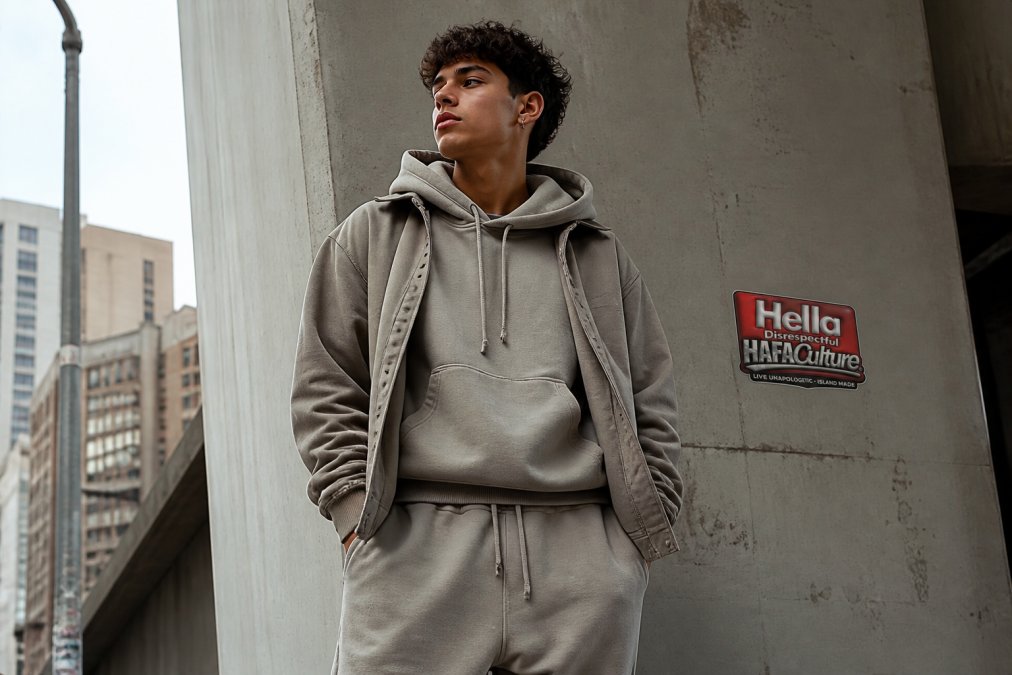
Start with proportion. If the top runs boxy, keep the bottom cleaner, and vice versa. Monochrome head-to-toe reads as a uniform, which can look sharp or stiff depending on the fit.
Layering for Depth
A matching set alone is flat. Layering adds dimension and lets you adjust for weather. Try an open button-up or overshirt over a hoodie for a clean look that still reads street. A long sleeve under a short-sleeve tee extends the set into cooler months without buying anything new.
Footwear and Accessories
Footwear decides the register of the whole outfit. Chunky sneakers push it casual. Clean leather boots pull it sharper. For accessories, pick one focal point and stop. A single chain or a beanie does more than five competing pieces.
The Versatility of Matching Apparel
The versatility of matching apparel is the single biggest factor in whether a set pays off. A good set gives you three outfits: the full coordinated look, the top styled with other bottoms, and the bottom styled with other tops.
That math matters. If you paid $65 for a set and wear it as three distinct outfits, your cost-per-wear drops fast. If you only wear it as a matched pair, you're paying full price for one look.
Wearing Pieces Separately
Separates are where sets prove their value. A hoodie from a set works over jeans, under a jacket, or with shorts. The sweatpants or knit bottoms pair with a plain tee or an oversized flannel. Break the set and you double its wardrobe rotation.
One rule: keep the color story coherent. A deep black set splits easily because black anchors almost anything. Loud prints and unusual colorways are harder to break apart.
| Way to Wear | Pieces Used | Best For |
|---|---|---|
| Full set | Top + bottom | Weekends, events, photos |
| Top only | Top + jeans or shorts | Daily errands, casual work |
| Bottom only | Bottom + plain tee or flannel | Lounging, travel days |
Fabric Quality and Longevity
Fabric quality determines whether a matching streetwear set survives a year of washing or pills after five wears. The difference between a set that lasts and one that doesn't comes down to three measurable things: fabric weight, fiber blend, and how the print or dye is applied.
Reading the Spec Sheet Like a Buyer
Fabric weight is measured in grams per square meter (GSM). If a product page doesn't list GSM, that's usually a signal the brand is hiding a thin fabric.
Fiber blend matters just as much. A cotton-poly blend (often 80/20 or 60/40) resists shrinkage and holds color longer but pills more easily if the poly content is high. A small amount of elastane (2-5%) helps a set keep its shape through repeated wear without going baggy at the knees or elbows.
Print and Dye Durability
Print method decides whether your graphic survives the wash cycle. A fade-resistant DTF (direct-to-film) print holds color and fine detail far better than cheap heat transfers that crack and peel after a handful of washes. Screen printing is durable on solid colors but struggles with gradients. Sublimation only works on polyester and fades on cotton blends.
“Disrespect the Norm – Mystery Box” →
The Wash-Test Reality
A set that holds its neckline, cuffs, and print after twenty washes costs less per wear than a bargain set that looks tired by month two. Reinforced double-stitched seams and ribbed cuffs are the two construction details that most reliably predict longevity.
The Sustainability Angle Most Guides Skip
Longevity is also an environmental question. The most sustainable set is the one you don't have to replace. A garment worn 100 times has roughly one-tenth the per-wear environmental footprint of the same garment worn 10 times and discarded. That means fabric durability isn't just a money issue, it's the single biggest lever a buyer has over the environmental cost of a matching set.
Sizing and Fit Challenges
Sizing is the number one reason matching sets get returned. Tops and bottoms don't always scale together, so a set that fits your shoulders may not fit your hips. But the deeper problem most guides ignore is that "true to size" means different things on different body types, and the right cut depends on your frame, not just the number on the tag.
Why Sets Fit Inconsistently
A common mistake is ordering one size for both pieces. If you're between sizes, size up on the bottom and stay true-to-size on the top, or buy the pieces as separates when the option exists.
- Check the size chart for each piece, not just the set
- Read reviews that mention height and weight, not just "fits great"
- Confirm the return policy before ordering
- When in doubt, size for the larger half of your body
Body-Type Styling: The Gap Most Guides Skip
Generic sizing advice assumes one body. In reality, the cut of a set, wide-leg versus tapered, boxy versus fitted, flatters different frames in very different ways. Here's how to match the cut to your build.
Wide-leg bottoms add visual volume through the leg and work best on taller frames or people who want to balance a broader upper body. On shorter frames, an unbroken wide leg can swallow the silhouette unless the waist sits high and the hem breaks cleanly at the shoe.
Tapered or jogger bottoms create a clean line from hip to ankle and flatter most builds, especially shorter frames and anyone who wants to avoid extra bulk. They pair well with a boxier top because the contrast in volume reads intentional.
Boxy tops balance narrow shoulders and add structure, but on a broader frame they can read as shapeless. If you're broad-shouldered, a slightly fitted or drop-shoulder top usually looks sharper than a true boxy cut.
The Proportion Rule
Fit and sizing also depend on the intended look. A true-to-size, slightly relaxed fit reads modern and clean. Going too tight kills the streetwear silhouette, and going too baggy swallows your frame. The goal isn't to match a size chart, it's to match a cut to your proportions.
Capsule Wardrobe Integration
A matching set earns a permanent spot in a capsule wardrobe when it plays well with what you already own. Capsule wardrobe integration means the set's colors and cuts work with your existing pieces, not against them.
Conclusion
The honest answer to whether matching streetwear sets are worth it depends on how you buy. Sets built from premium fabrics, cut for a real fit, and designed to break apart into separates pay for themselves. Trend-driven sets that only work as a pair rarely do.
Frequently Asked Questions
Are matching sets going out of style?
No, matching streetwear sets are not going out of style. They have moved from a niche trend to a wardrobe staple. The trend cycle now favors coordinated looks that can be broken up and worn separately, which extends their life. As long as comfort and street style remain priorities, matching sets will stay relevant. The key is choosing sets made from premium fabrics and versatile colors that fit your personal aesthetic.
How do you style a matching streetwear set without looking like you're wearing pajamas?
The difference is in the details. Choose sets made from structured fabrics like heavyweight cotton or nylon, not thin loungewear material. Add a third piece, such as a denim jacket, bomber, or chunky sneakers, to break up the uniformity. Tuck in the top or knot it to create a silhouette. Accessories like a cap, chain, or bag also signal intention. The goal is a coordinated look, not a bedtime one.
Can you wear matching set pieces separately to maximize value?
Yes, wearing pieces separately is the best way to get your money's worth. A hoodie from a set pairs with jeans, while the sweatpants work with a plain tee. This versatility of matching apparel means you are not locked into one look. Before buying, ask yourself if each piece works with at least three other items in your wardrobe. If not, the cost-per-wear will be too high.
How do you choose high-quality streetwear sets that last?
Look for specific construction details. Check for heavyweight cotton or soft-blend fabrics that feel substantial. Inspect the print quality: DTF prints should be fade-resistant and fully integrated into the fabric, not a plastic layer on top. Reinforced stitching at stress points and ribbed cuffs on hoodies and sleeves are good signs. A true-to-size, slightly relaxed fit also indicates better pattern-making. These factors separate a fashion investment from a fast-fashion purchase.