

Why DTF Prints Feel Heavy After Washing
Table of Contents
- Why DTF Prints Feel Heavy After Washing
- DTF Print Washing Instructions That Protect Softness
- How to Soften a DTF Print After Washing
- DTF Transfer Pressing Temperature and Consistency
- DTF Transfer Too Thick: Diagnosis and Prevention
- Fabric Type and Garment Weight as Heaviness Factors
- Testing Your DTF Prints Before Full Production
- Frequently Asked Questions
Last Updated: October 21, 2026
Why DTF Prints Feel Heavy After Washing
Heavy, stiff DTF prints heavy after washing frustrate customers and damage your reputation as a custom apparel creator. The problem isn't always the print itself, it's usually a combination of how the transfer was applied, how it's being cared for, and what fabric you're working with.

DTF prints feel heavy after washing because of adhesive powder buildup, excessive ink coverage, or improper curing during the pressing process.
The good news: most of this is preventable, and some of it is fixable even after the fact.
The Role of Adhesive Powder in Print Weight
Adhesive powder is what bonds your DTF transfer to the fabric. Without it, the print falls apart in the wash. But too much powder, or uneven coverage, creates that stiff, plasticky feel that makes wearing the garment uncomfortable.
Here's what happens: when you apply adhesive powder to a DTF transfer, it needs to coat the entire design evenly. If you use too much, the powder creates a thick layer that doesn't fully melt into the fabric during pressing. Even after washing, that layer stays rigid.
The fix starts before you press:
- Use just enough powder to create a thin, even coating
- Tap off excess powder before pressing, don't let it pile up
- Make sure powder reaches all edges of your design
- Press at the right temperature so the powder fully bonds to the ink and fabric
If your prints already feel heavy, the adhesive layer is probably locked in. Washing won't remove it, but gentle stretching can help redistribute the stiffness.
How Ink Layers and Coverage Affect Hand Feel
Full-coverage designs naturally feel heavier than small logos or text. This isn't a defect, it's physics. More ink means more adhesive, which means more stiffness.
A small chest print on a t-shirt feels almost normal because most of the garment is still soft fabric. A full-back design or an oversized print covers so much surface area that the entire shirt feels different.
Design size matters more than most people realize:
- Small prints (3-5 inches) rarely cause heaviness complaints
- Medium prints (8-9 inches) sometimes feel stiff, especially on lightweight fabrics
- Large prints (12+ inches) almost always feel noticeably heavier, especially on the back
If you're designing custom apparel, manage expectations upfront. Customers need to know that a full-back design will feel different from a small logo print. It's not poor quality, it's the nature of the transfer.
DTF Print Washing Instructions That Protect Softness
How your customer washes their garment determines whether the print stays soft or gets stiffer. Wrong washing habits lock in stiffness that can't be undone.
Cold Water and Inside-Out Washing
Cold water is your best friend for DTF prints. Hot water can soften the adhesive layer and cause the print to bond more firmly to the fabric. Inside-out washing protects the print from direct friction with other garments and detergent buildup.
The washing routine that works:
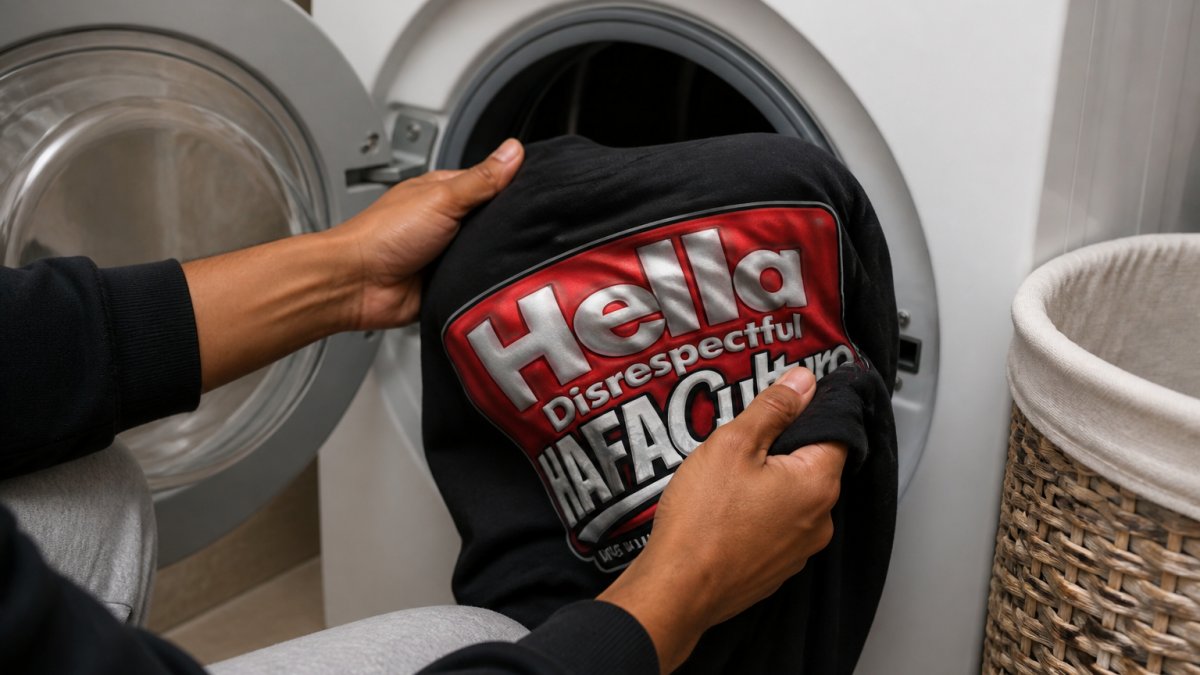
- Turn the garment inside out before washing
- Use cold water only, no hot or warm water
- Wash with similar colors to avoid dye transfer
- Use gentle detergent, not heavy-duty formulas
- Avoid bleach and fabric softener entirely
- Wash on a gentle cycle, not regular or heavy
Fabric softener is the enemy. It coats the fabric and can make the print feel even stiffer by creating a waxy layer around the adhesive.
Drying Methods That Reduce Stiffness
How you dry the garment matters as much as how you wash it. High heat locks in stiffness. Air drying keeps the fabric more flexible.
The best drying approach:
- Air dry whenever possible, lay flat or hang on a line
- If using a dryer, use low heat only
- Remove from dryer while still slightly damp
- Never use high heat or extended cycles
- Avoid over-drying, which stiffens the entire garment
Air drying takes longer, but it's worth it. The fabric stays more relaxed, and the print feels softer because the adhesive layer doesn't get further set by heat. If your customers are in a rush, low dryer heat is acceptable, but high heat will tighten everything up.
How to Soften a DTF Print After Washing
If the print is already stiff, you have limited options, but some do work. The goal is to relax the adhesive layer and the fabric around it without damaging the print.
Gentle Stretching and Fabric Conditioning
Gentle, consistent stretching can help redistribute the stiffness and make the print feel less rigid. This works best if the print hasn't been washed dozens of times already.
How to stretch a print:
- Lay the garment flat on a clean surface
- Gently pull the fabric in all directions, focusing on the printed area
- Apply slow, steady pressure, don't yank or jerk
- Stretch for 30-60 seconds in each direction
- Repeat this process 2-3 times over a week
Fabric conditioning products designed for softening can help, but use them sparingly. Test on a hidden area first.
Better option: use white vinegar in the rinse cycle. Add half a cup to the final rinse when washing the garment again.
When to Accept Hand Feel as Part of Design Size
Sometimes the heaviness is just part of the design you chose. A full-back design will always feel heavier than a small chest logo. That's not a failure, that's reality.
Help your customers understand this upfront:
- Show them the design size relative to the garment
- Explain that larger designs feel different
- Suggest starting with smaller prints if they're concerned about hand feel
- Remind them that DTF prints are durable because of the adhesive layer, softness is the trade-off
When customers know what to expect, they don't feel disappointed. Set expectations before they order, and you'll get fewer complaints.
DTF Transfer Pressing Temperature and Consistency
How hot and how long you press the transfer directly affects how stiff the print feels. Inconsistent pressing creates inconsistent hand feel, which makes the whole garment feel wrong.
The pressing sweet spot depends on your fabric. Too hot or too long, and the adhesive over-cures and gets stiffer. Too cool or too short, and the transfer doesn't bond properly, leading to peeling or cracking.
Consistency matters as much as the exact temperature:
- Use the same temperature for every press
- Time each press the same way, use a timer, don't guess
- Apply even pressure across the entire design
- Make sure your heat press has good contact with the garment
If your press temperature varies by 20 degrees from shirt to shirt, you'll get wildly different hand feel across your production. Customers will notice. Invest in a quality heat press with good temperature control.
DTF Transfer Too Thick: Diagnosis and Prevention
A DTF transfer that feels too thick is usually the result of problems that happened during application, not during washing. Thickness comes from adhesive powder, ink buildup, or both.
Powder Coverage and Bonding Issues
Too much adhesive powder creates thickness that can't be fixed after pressing. The powder needs to melt into the ink and bond to the fabric. If you apply too much, it sits on top like a coating instead of integrating.
Check your powder application:
- Are you using a powder applicator or shaking it on by hand?
- Is the coverage even across the entire design?
- Are you tapping off excess powder before pressing?
- Is your powder fresh, or has it been sitting open and clumping?
Old, clumpy powder applies unevenly and creates thick spots. Replace powder regularly. Fresh powder applies more smoothly and bonds better.
Double Pressing and Over-Curing
Pressing the same transfer twice, once to cure it, then again after it cools, can lock in extra stiffness. Some people do this thinking it improves durability, but it usually just makes the print feel heavier.
Press once, press right:
- Apply the transfer once at the correct temperature and time
- Let it cool completely before moving the garment
- Don't re-press unless the transfer didn't bond properly
- If bonding failed, the issue is usually temperature or pressure, not the need for a second press
Over-curing happens when you press too long or too hot. The adhesive fully hardens instead of staying slightly flexible. This creates that plastic-like feel that customers hate.
Fabric Type and Garment Weight as Heaviness Factors
Not all fabrics feel the same with DTF prints. Cotton feels different from polyester blends, and lightweight fabrics react differently than heavyweight ones.
100% cotton absorbs the adhesive layer more evenly, so the print feels more integrated into the fabric. Polyester blends don't absorb as well, so the print sits more on top, feeling heavier and stiffer.
Garment weight also matters:
- Lightweight cotton (4-5 oz) feels stiffer with a print because the whole shirt is delicate
- Standard weight cotton (6-6.5 oz) balances well with DTF transfers
- Heavyweight cotton (7+ oz) masks the print stiffness because the whole garment is already substantial
If your customers complain about heaviness, consider recommending standard or heavyweight garments. The print will feel less noticeable because it's proportional to the overall weight of the shirt.
Testing Your DTF Prints Before Full Production
Before you commit to a large run, test your setup with a single print. This catches problems before they multiply across dozens of garments.
What to test:
- Press one transfer at your target temperature and time
- Wash it using the care instructions you'll give customers
- Dry it using the recommended method
- Feel the hand feel and assess the result
- If it's too stiff, adjust your powder amount or pressing time
- Test again with the new settings
Document your results:
- Temperature used
- Press time
- Powder amount (light, medium, heavy)
- Fabric type and weight
- Hand feel after washing
- Any peeling, cracking, or fading
Keep records so you can replicate success and avoid repeating mistakes. What works for one design might not work for another, especially if the design size or coverage is very different.
A simple wash test takes 48 hours but saves you from producing 100 bad shirts where DTF prints heavy after washing. Always test first.
Heavy DTF prints after washing frustrate customers and damage your reputation.
At Hella Disrespectful Clothing, we recommend starting with our Single DTF Prints to test your setup before committing to bulk production. Once you've nailed the hand feel on a test garment, scale up with confidence using our Custom DTF Gang Sheets for production runs. If you need help with pressing or design setup, our Add Services include heat press application and design consultation, get it right from the start, and your customers will love the result.


Frequently Asked Questions
Why do DTF prints feel heavy or stiff after washing?
DTF prints feel heavy after washing because of adhesive powder buildup, thick ink layers, and the way the transfer bonds to fabric during pressing. The adhesive layer creates a stiff barrier that can intensify if the print covers a large area or if the garment is washed in hot water or dried on high heat.
How should I wash clothes with DTF prints to keep them soft?
Wash DTF prints in cold water on a gentle cycle, and always turn the garment inside out to reduce surface abrasion. Use mild detergent and avoid bleach or fabric softeners that can degrade the adhesive layer. Air dry or use low heat in the dryer instead of high heat, which can set the stiffness. These washing instructions help preserve the print's flexibility and extend its durability without compromising the bond.
Can I make a DTF print feel softer after it's already stiff?
Yes. Gently stretch the printed area by hand while the garment is still slightly damp after washing, working the fabric to loosen the adhesive layer without tearing it. You can also wear the garment regularly, repeated gentle movement and body heat gradually soften the print over time. Avoid aggressive washing or high-heat drying, which will only make it stiffer. If the print was pressed too hot or with too much pressure, some stiffness may be permanent.
What pressing temperature should I use for DTF transfers to avoid a thick, heavy feel?
Pressing too hot or too long can over-cure the adhesive, making the print feel plastic-like and heavy. Inconsistent heat or double pressing also adds thickness. Use a quality heat press with even pressure distribution, and test on a scrap garment first to dial in the exact temperature and time for your specific transfer and fabric type.