

Hafa Adai Meaning: The Chamorro Greeting Explained
Table of Contents
- Hafa Adai Meaning: More Than Just a Greeting
- The Literal Translation and Phonetic Pronunciation
- Hafa Adai vs. Aloha: What's the Difference?
- The Cultural Significance of Hafa Adai in Guam
- How to Respond to Hafa Adai Like a Local
- Beyond Hello: Other Chamorro Language Greetings
- Carry the Spirit of the Marianas
- Conclusion: The Spirit of Hospitality
- Frequently Asked Questions
Last Updated: September 7, 2026
Hafa Adai Meaning: More Than Just a Greeting
Hafa Adai (pronounced "HAH-fuh DYE") is the traditional Chamorro greeting of the Mariana Islands, carrying the deep cultural weight of "hello," "welcome," and "how are you?" all at once. The hafa adai meaning goes beyond tourist brochures: it's an expression of genuine hospitality and community connection. This guide breaks down the hafa adai meaning, its pronunciation, and how to use it with the respect it deserves.

The phrase comes from the Chamorro language, the indigenous tongue of Guam and the Northern Mariana Islands. For Chamorro people scattered across the Pacific and the mainland United States, hearing "Hafa Adai" is like hearing home.
The Literal Translation and Phonetic Pronunciation
The hafa adai meaning starts with the words themselves. "Hafa" translates roughly to "what," and "Adai" relates to the concept of a relationship or connection. Put together, the greeting asks, "What is our relationship?" or more loosely, "What's happening with you?" It's not a direct word-for-word translation, which is why understanding the cultural context matters as much as the vocabulary.
To master the greeting, you need the phonetic mechanics that make it sound natural to a native ear:
Syllable-by-Syllable Phonetics
In fast, natural speech, the greeting often collapses into a single rhythmic unit: HAH-fuh-dye.
- Ha - Pronounced like the "ha" in "hut" (not "hay"). It is a short, open back vowel, similar to the "a" in "father" but clipped.
- fa - This is the unstressed syllable. It reduces to a schwa-like sound, /fə/, almost like "fuh." Do not give it full vowel weight. Saying "HAH-fah" with equal stress on both syllables is a common error that marks you as a non-native speaker.
- A - The first syllable of "Adai" is also unstressed in connected speech. It reduces to /ə/, so the whole word sounds like "uh-DYE" rather than "AH-dye."
- dai - This is the stressed syllable of the second word.
Put it all together: /ˈhɑ.fə ˌdaɪ/, with primary stress on "HAH" and secondary stress on "DYE." The entire phrase takes about one second to say.
Intonation and Cadence
The Most Common Mispronunciations (and Why They Happen)
Three errors dominate among English speakers:
- Equal stress on all syllables ("ha-FA a-DYE") -
- Pronouncing "Adai" as three syllables ("ah-dah-ee") -
- Rounding the "a" in "Hafa" ("HAY-fuh") - This is a carryover from English spelling-to-sound rules.
Why the Phonetic Detail Matters
This greeting is meant to be spoken, not read. In daily conversation across Guam, you'll hear it delivered fast and warm, almost like a single word.
Matching the stress pattern and reduced vowels signals that you have taken the time to listen, not just to read a phrasebook.
Hafa Adai vs. Aloha: What's the Difference?
People often compare Hafa Adai to Hawaii's "Aloha," and the comparison makes sense on the surface. Both are Pacific Islander greetings that have become cultural symbols, but the hafa adai meaning diverges from Aloha in significant ways.
Aloha carries a spiritual weight, encompassing love, compassion, and mercy as a way of life. Hafa Adai is more grounded in social interaction, the verbal equivalent of opening your door and inviting someone in. Where Aloha feels like a philosophy, Hafa Adai feels like an action.
Another key difference is recognition. Aloha has achieved global status through tourism and media. Hafa Adai remains more contained, a point of pride for Chamorro identity but less familiar to the wider world. According to the University of Guam's linguistic resources on the Chamorro language, this relative obscurity makes the greeting even more important as a marker of cultural identity and language preservation efforts.
Both emerged from island cultures that prioritize community over individualism, but they express that value differently. Aloha is a state of being; Hafa Adai is a call to connection.
The Cultural Significance of Hafa Adai in Guam
In Guam, Hafa Adai is not just a word you say in the morning. It's the social glue that holds daily interactions together. Walk into a store, and you'll hear it. Meet a friend's parents, and you'll say it. The greeting signals that you recognize the other person as part of your community.
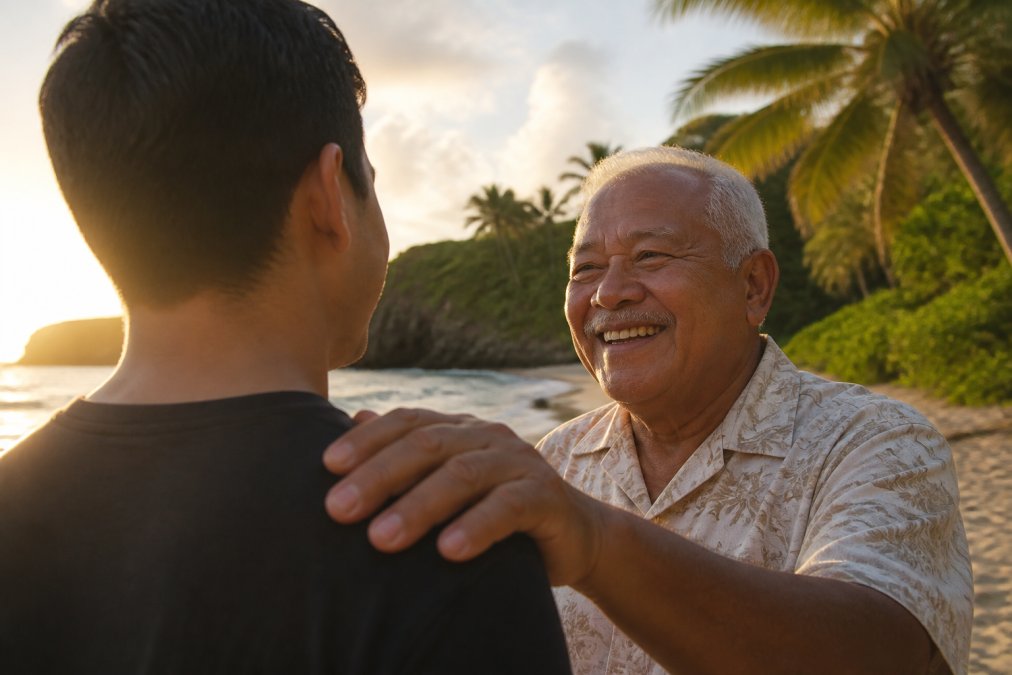
The cultural significance runs deep because the Chamorro people have survived colonization, war, and displacement. The language itself was suppressed during the American era of Guam's history, and cultural preservation efforts documented by the Guam Preservation Trust have worked to revive Chamorro fluency among younger generations. Saying "Hafa Adai" is an act of resistance and pride. It's a verbal declaration that the Chamorro identity endures.
For Chamorros in the diaspora, particularly in places like California and Las Vegas, the greeting is a lifeline to home, a way to find each other in a crowd and to pass cultural heritage to kids who may have never set foot on the island.
How to Respond to Hafa Adai Like a Local
Knowing how to respond is just as important as knowing what is the meaning of Hafa Adai in the first place. The standard response is "Hafa Adai" back, often followed by "Hafa tatatmanu hao?" which means "How are you doing?" If you want to keep it simple, just mirror the greeting with a smile.
The Non-Verbal Etiquette That Accompanies the Greeting
The Conversational Script: What Comes After "Hafa Adai"
Here's a quick reference for common exchanges:
- Standard response: "Hafa Adai" (echo it back with a nod)
- If asked "Hafa tatatmanu hao?" (How are you?): Respond "Maolek ha'" (I'm good) or "Todu maolek" (All is well)
- If you don't speak Chamorro: Say "Hafa Adai" back and follow with "I'm still learning" in English. Locals appreciate the effort and will often switch to English to help you out.
Situational Nuance: When to Use the Full Greeting vs. the Short Form
What NOT to Do: Common Etiquette Mistakes
The Deeper Meaning Behind the Response
A well-executed response tells the other person: "I see you. I acknowledge our shared humanity. I am willing to slow down and be present with you." That is the true hafa adai meaning in action.
Beyond Hello: Other Chamorro Language Greetings
Once you've mastered "Hafa Adai," you can expand your Chamorro greetings repertoire:
- "Buenas dias" (Good morning): Borrowed from Spanish but used widely in daily vernacular
- "Buenas tåtdes" (Good afternoon)
- "Buenas puengi" (Good evening/night)
- "Hafa tatatmanu hao?" (How are you?)
- "Maolek ha'" (I'm good / fine)
- "Si Yu'us ma'åse" (Thank you, literally "May God repay you")
- "Adios" (Goodbye, also Spanish-derived)
The Spanish loanwords reflect Guam's colonial history under Spain.
Language preservation is a live concern. UNESCO's assessment of endangered languages in the Pacific has flagged Chamorro as potentially vulnerable, which makes every use of these greetings a small act of cultural maintenance. When you learn and use Chamorro phrases, you're supporting the survival of a language that carries centuries of island history.
Carry the Spirit of the Marianas
Understanding the hafa adai meaning naturally leads to wanting to carry that spirit with you. For those of Chamorro heritage, wearing the greeting on your sleeve is a way to declare your identity without saying a word. For allies and appreciators, it's a mark of respect and connection to the islands.
This is the philosophy behind the Hafa Culture collection from Hella Disrespectful Clothing. The Håfa Culture Tee features the iconic latte stone, the Marianas island chain, and the 671 area code, designed for Chamorros and islanders who greet the world with cultural pride. The Hafa Adai Hibiscus Tee blends the vibrant flower with the greeting itself, representing the warmth of the Marianas.

These designs aren't about appropriation. They're about representation. The brand was built on an unapologetic, independent philosophy that values authenticity over external validation, which aligns directly with the cultural resilience that Hafa Adai represents.
Conclusion: The Spirit of Hospitality
The hafa adai meaning is ultimately about the spirit of hospitality, a value that defines Chamorro culture and the broader island ethos of the Pacific. It's a greeting that asks about your well-being, welcomes you into the community, and affirms a shared identity. In a world that moves fast, Hafa Adai is a reminder to slow down and connect.
Learning to say it correctly, respond appropriately, and understand its cultural weight is a small effort with significant reward. Whether you're visiting Guam, meeting Chamorro friends in the diaspora, or simply want to expand your understanding of Pacific Islander cultures, this greeting is your doorway in.
At Hella Disrespectful Clothing, we believe culture is meant to be worn with pride. Our Hafa Culture collection and custom DTF printing services let you carry the spirit of the Marianas wherever you go.
Frequently Asked Questions
How do you respond to Hafa Adai?
The most common and respectful response is simply to say 'Hafa Adai' back. It works as both a question and a greeting, so mirroring the phrase is standard practice. The key is to match the warm, welcoming tone of the person who greeted you first.
What does Hafa Adai mean in English?
While often translated as 'Hello,' the Hafa Adai meaning is closer to 'What's up?' or 'How are you?' The greeting is a core part of Chamorro language and reflects the inviting, community-focused spirit of the Mariana Islands, used by locals and visitors alike.
Is Hafa Adai used in formal or informal settings?
Hafa Adai is wonderfully versatile and used in both formal and informal settings. You'll hear it in casual conversation between friends, as well as in official openings, business meetings, and government functions across Guam.
What are some other common Chamorro language greetings?
Beyond Hafa Adai, a common Chamorro language greeting is 'Manmanagilao,' which is a more formal way to say hello. For 'goodbye,' you can say 'Asta agupa'' (until tomorrow) or 'Asta uno diha' (see you one day). Using these phrases shows respect for the indigenous language and its cultural heritage.
This guide was created by Hella Disrespectful Clothing, a brand dedicated to authentic, independent style rooted in cultural pride.