

Wearing Cultural Prints: A Respectful Guide
Table of Contents
- Cultural Appreciation vs. Appropriation: What's the Real Difference?
- Understanding the Meaning of Cultural Patterns and Symbols
- How to Wear Cultural Prints Respectfully
- How to Identify a Print's Origin and Restrictions
- Supporting Indigenous and Cultural Designers
- What to Do If You've Caused Offense
- Frequently Asked Questions
Last Updated: October 16, 2026
Cultural Appreciation vs. Appropriation: What's the Real Difference?
The line isn't always obvious. It's not about whether you wear something from another culture, but how, why, and whether you're honoring or exploiting it. Wearing cultural prints with respect means understanding that difference.
Appreciation asks permission and acknowledges the source; appropriation takes what it wants and ignores the people it came from. When you wear cultural prints respectfully, you choose to learn, honor, and support.
The problem is knowing where that line sits. Intent matters, but impact matters more: you can wear something with the best intentions and still cause harm if you don't understand its significance.
Understanding the Meaning of Cultural Patterns and Symbols
Cultural patterns and symbols carry weight. They're not just decoration. They tell stories, mark identity, and sometimes hold spiritual meaning. A print that looks beautiful to you might represent something sacred or deeply personal to someone else.
Different types of cultural clothing require different levels of consideration:
Sacred Garments and Ceremonial Clothing
Sacred garments are off-limits for casual wear. These are items earned, gifted, or created for specific spiritual or ceremonial purposes, regalia, religious vestments, or garments worn only during important ceremonies.
Wearing sacred clothing without belonging to that culture is like wearing a military uniform you didn't earn or a religious vestment you don't practice. The harm is direct. If you're unsure whether something is sacred, ask someone from that culture first.
Prints, Patterns, and Traditional Design
Prints and patterns are more complex. A traditional pattern, like African Kente cloth prints, Indigenous geometric designs, or Asian textile patterns, can be worn respectfully when you understand what it represents and credit the culture.
A print is a design element that can be shared and celebrated; sacred items are earned or gifted. Knowing the difference changes how you approach wearing it.
How to Wear Cultural Prints Respectfully
Principles are easy; decisions are hard. Here's concrete guidance for where people actually wear cultural prints: everyday outfits, workplaces, cultural events, travel, and social media.
The intent and impact framework, sharpened
Your intent is the starting point, not the defense. Use four checks before you wear:
- Intent: Are you wearing this to celebrate, learn, or connect, or mainly because it looks exotic or trendy?
- Impact: Could someone from the culture read this as mockery, stereotype, costume, or profit-taking?
- Knowledge: Can you explain what the print means and where it comes from if asked?
- Credit and compensation: Did you buy from a maker within the culture, and are you willing to name the source?
If any answer is shaky, the choice is shaky.
A practical decision checklist
- I know the specific name and cultural origin of this print
- I can explain what the pattern or symbol means
- I'm not wearing it to mock, stereotype, or sexualize the culture
- I'm willing to credit the culture and the maker if asked
- I bought from a cultural or Indigenous maker, or I can explain why not
- It is not sacred, ceremonial, or regalia meant only for community members
- I would be comfortable explaining my choice to someone from that culture
- The context (work, event, travel, everyday) fits the garment
If you can't check every box, don't wear it yet, or wear it differently.
Scenario guidance
Everyday wear. A print tee, scarf, or accessory from a maker within the culture is low-risk when you can name the source and meaning.
Workplaces. In most U.S. workplaces, a cultural print accessory or top is fine when it reads as intentional rather than costume.
Travel. Wearing local textiles respectfully supports local economies, buy from local makers, wear the garment as intended, and follow local norms on modesty and occasion.
Social media and Halloween. Costume contexts are where appropriation is most visible.
Credit, sourcing, and compensation
Respectful wear includes the supply chain. Buy from Indigenous and cultural designers and cooperatives when you can; when you can't, say so honestly and avoid claiming authenticity you can't verify. Credit the maker and tradition when you post, teach, or gift the item. A print that profits a brand while the originating community sees nothing is appropriation regardless of intent.
When you're unsure
Ask. A short question to a cultural center, maker, or friend from the community is almost always welcome and prevents harm. If you can't get a clear answer, choose the conservative option, there will be other outfits.
How to Identify a Print's Origin and Restrictions
Most guides stop at "do your research", not actionable when you're in a store holding a garment. Here's a concrete sequence for tracing a print's origin, meaning, and restrictions before you buy or wear it.
Step 1: Name the pattern, not just the vibe
Identify what the print is actually called. "Tribal," "ethnic," and "boho" are marketing labels, not origins. Look at the hang tag or listing for a specific name, Kente, Adinkra, mudcloth (bògòlanfini), Hmong batik, Otomi embroidery, Navajo geometric weaving, Hawaiian quilt patterns, Chamorro latte stone motifs. A specific name is the first sign the seller knows what they're selling.
If the listing only says "African print" or "Indigenous-inspired," treat that as a yellow flag. It may be a legitimate design, but the seller hasn't given you enough to verify it.
Step 2: Trace the pattern to a people and a purpose
Once you have a name, search it plus "meaning," "symbolism," or "cultural significance." Prioritize sources from inside the culture, community cultural centers, museum textile departments, textile history programs, and interviews with makers. The strongest explanations usually come from small cultural organizations and individual artisans, not retailer blogs.
Ask three questions of what you find:
- Is this pattern everyday, ceremonial, or restricted? Some designs are worn broadly within a culture. Others mark rites of passage, rank, mourning, or spiritual practice and are not meant for outsiders.
- Is the pattern earned or gifted? Regalia, certain headdresses, and specific woven cloths are conferred rather than purchased. Wearing a purchased imitation of an earned item is a different act than wearing a widely shared print.
- Is the pattern sacred? Symbols tied to religious practice, ancestors, or creation stories carry restrictions that vary by community. When in doubt, assume restricted until someone from the culture tells you otherwise.
Step 3: Check who made it and who profits
Provenance is about the supply chain, not just the design. Look for:
- Named makers or cooperatives. A listing that credits a specific artisan, family, or cooperative is a stronger signal than an anonymous "ethnic print" label.
- Country and community of production. Where was the textile printed or woven? By whom? If the answer is a mass-production facility with no connection to the originating community, the design may be a copy.
- Licensing or collaboration language. Some Indigenous designers and nations license their designs or collaborate with brands. Look for explicit credit and compensation language.
- Price signals. Hand-printed, hand-woven, or community-made textiles usually cost more than factory reproductions. A suspiciously low price on a "traditional" print is worth questioning, not because cheap is always wrong, but because it often signals copied work.
U.S. Copyright Office guidance on Indigenous and traditional cultural expressions
Step 4: Distinguish prints from sacred symbols, regalia, and full outfits
These categories carry different responsibilities, and conflating them is where most mistakes happen:
- A print or pattern is a design element. It can often be worn respectfully with credit and context, especially when you buy from makers within the culture.
- A sacred symbol (religious iconography, ancestor motifs, ceremonial glyphs) is not decoration. Avoid wearing it as fashion unless you belong to the tradition or have explicit guidance.
- Regalia is earned, gifted, or ceremonial dress, military-style honors, dance regalia, religious vestments. It is not available for purchase-and-wear by outsiders.
- A complete traditional outfit (a specific garment form, not just a fabric) may carry protocol about who wears it, when, and how. A print inspired by a tradition is not the same as wearing the tradition's garment.
Step 5: Verify with the community when it matters
If the print is tied to a specific community and you're unsure whether it's shareable, ask. Cultural centers, tribal offices, and community organizations often have public guidance. A short, respectful email asking whether the pattern is appropriate and for guidance is usually welcome and prevents harm.
This research takes an afternoon, not a week. But it's the difference between wearing a print you understand and wearing one you merely like the look of.
Supporting Indigenous and Cultural Designers
The most respectful way to wear cultural prints is to buy from Indigenous and cultural makers directly, the money goes to the people whose culture and creativity you're celebrating.
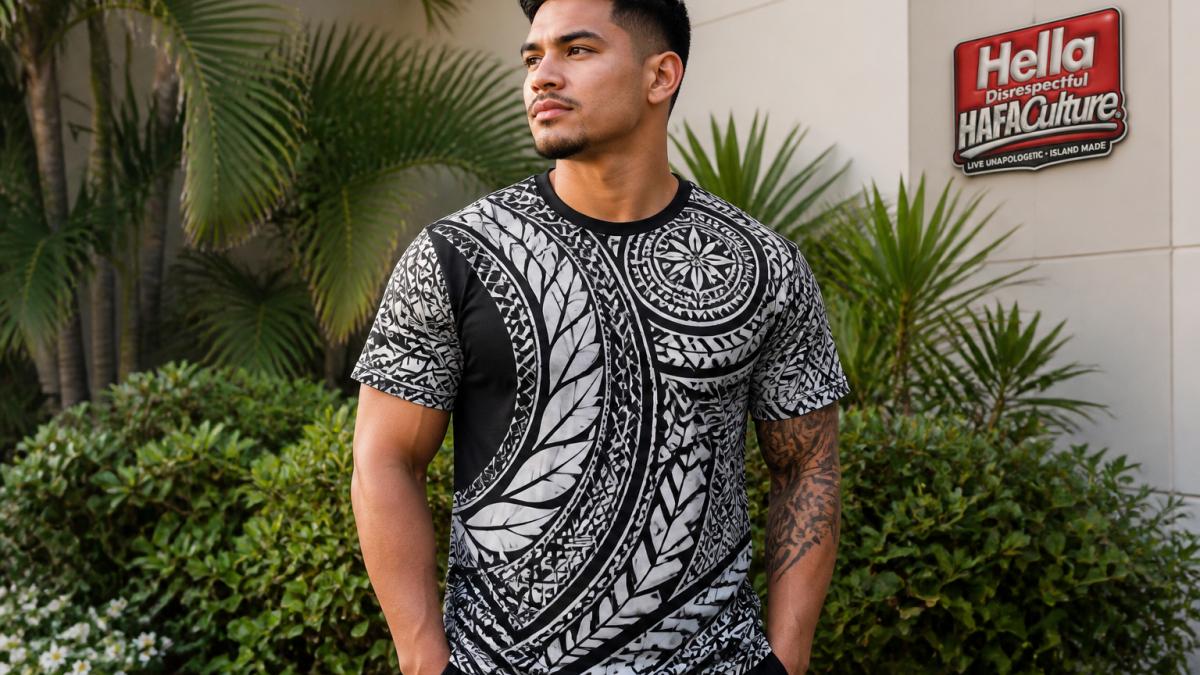
Hella Disrespectful Clothing's Hafa Culture collection represents this approach. Our Guåhan Culture Tee ($25.00) features bold Chamorro designs, the latte stone, island silhouette, traditional-inspired patterns, and the 671 area code.

We also offer the Pacifika Culture Tee ($25.00), celebrating the shared strength of Polynesia, Melanesia, and Micronesia with traditional voyaging canoes, island landscapes, and cultural patterns.
Our custom DTF printing service lets you create designs that matter to you.
When you buy from cultural designers, you're making a statement: this culture matters, these creators deserve to be paid, and authenticity is worth supporting.
What to Do If You've Caused Offense
You wore something without thinking, and someone from that culture called you out. Now what?
The first instinct is to defend yourself. Don't. Listen instead.
Here's what to do:
Listen without defending. Don't explain why you didn't mean harm. Intention doesn't erase impact. Just listen to what they're telling you.
Apologize sincerely. Say you didn't understand the significance and you appreciate them explaining it. Mean it.
Learn from it. Research what they told you. Understand why it was offensive.
Don't repeat the mistake. This is the real apology.
Don't expect forgiveness. You're not owed it.
This isn't about shame; it's about growth. Everyone makes cultural-sensitivity mistakes.
Wearing cultural prints respectfully means asking questions before you wear something.
Frequently Asked Questions
What's the difference between cultural appreciation and cultural appropriation when wearing cultural prints?
Cultural appreciation means engaging with a culture respectfully, learning its history, seeking permission, crediting makers, and recognizing the power dynamics at play. Cultural appropriation strips a culture of context, profits from it without consent, or uses sacred elements casually. When wearing cultural prints, ask yourself: Am I honoring this culture's story, or am I treating it as a trend? Do I understand what I'm wearing? Have community members been consulted or compensated? Intent matters, but impact matters more.
How can I tell if a cultural print is sacred or just a traditional design?
Sacred and ceremonial garments carry spiritual significance and are typically reserved for specific rituals, initiations, or community roles. Traditional prints and patterns, while culturally meaningful, are designed for broader wear. Research the print's origin: Does it relate to spiritual practices, healing ceremonies, or restricted knowledge? Are elders or cultural authorities the only ones who traditionally wear it? If you're unsure, reach out to community members directly.
How do I support the culture behind a print when buying clothing?
Buy from cultural makers and Indigenous-owned businesses whenever possible. Check if profits go back to the community. Ask brands about their sourcing and design process, do they employ community members? Do they credit the cultural origins of their designs? Look for transparency about labor practices and compensation. Their Guåhan Culture Tee ($25.00) and other collections are designed to honor specific communities. Beyond purchases, amplify these voices, learn the history behind designs, and call out brands that profit from culture without giving back.
Is it okay to wear cultural prints if I'm not from that culture?
Yes, if you approach it with respect and understanding. Wearing cultural prints isn't inherently wrong, it can be a form of appreciation, solidarity, or celebration. The key is intent and impact. Understand what you're wearing and why. Seek guidance from people within that culture. Avoid sacred or ceremonial pieces. Credit the cultural origin and support the makers. Be open to feedback if someone from that culture expresses concern. Respectful participation in another culture's sartorial traditions means being willing to listen, learn, and adjust your choices based on community feedback.