

Are Eco Friendly Printing Alternatives Worth It?
Last Updated: October 29, 2026
Quick Summary
Eco friendly printing is worth it when the method matches the job: water-based inks, DTG or DTF for detailed small runs, and screen printing for bold few-color designs on large orders. The printing process adds its own water, energy and chemistry on top of the fabric, so it deserves as much attention as the blank.
- The printing method is part of the product, adding its own water, energy and chemistry inputs.
- DTG and DTF suit detailed, full-color designs on small runs.
- Screen printing suits bold designs with few colors on runs of 50 or more.
- Water-based ink describes the carrier, not the whole process, so ask for the full data sheet.
- Verify claims by checking the certificate scope, which may cover the fabric, the ink or neither.
Table of Contents
- DTG vs Screen Printing: Side-by-Side Comparison
- Water-Based Ink Apparel Printing: What the Label Really Means
- Eco-Friendly Screen Printing: Where It Works and Where It Falls Short
- DTF Printing Sustainability: Lifecycle Impacts and Waste
- Certifications, Claims and How to Verify Them
- Choosing Your Printing Method for Your Next Drop
- Frequently Asked Questions
Choosing an eco-friendly shirt is only half the sustainability question. The printing method on top of that blank can change the environmental footprint, the feel and the durability of the finished piece, so eco friendly printing deserves as much attention as the fabric itself.
Most shoppers focus on fabric: organic cotton, recycled polyester, blends. Those choices matter. But the ink, the pretreatment and the curing process add their own inputs of water, energy and chemistry.
Eco friendly printing is not one thing. Water-based inks, lower-impact screen printing, DTF transfers and direct-to-garment (DTG) printing each use different materials and workflows. The right choice depends on what you print, how many pieces you need and how the garment will be used and washed.
DTG vs Screen Printing: Side-by-Side Comparison
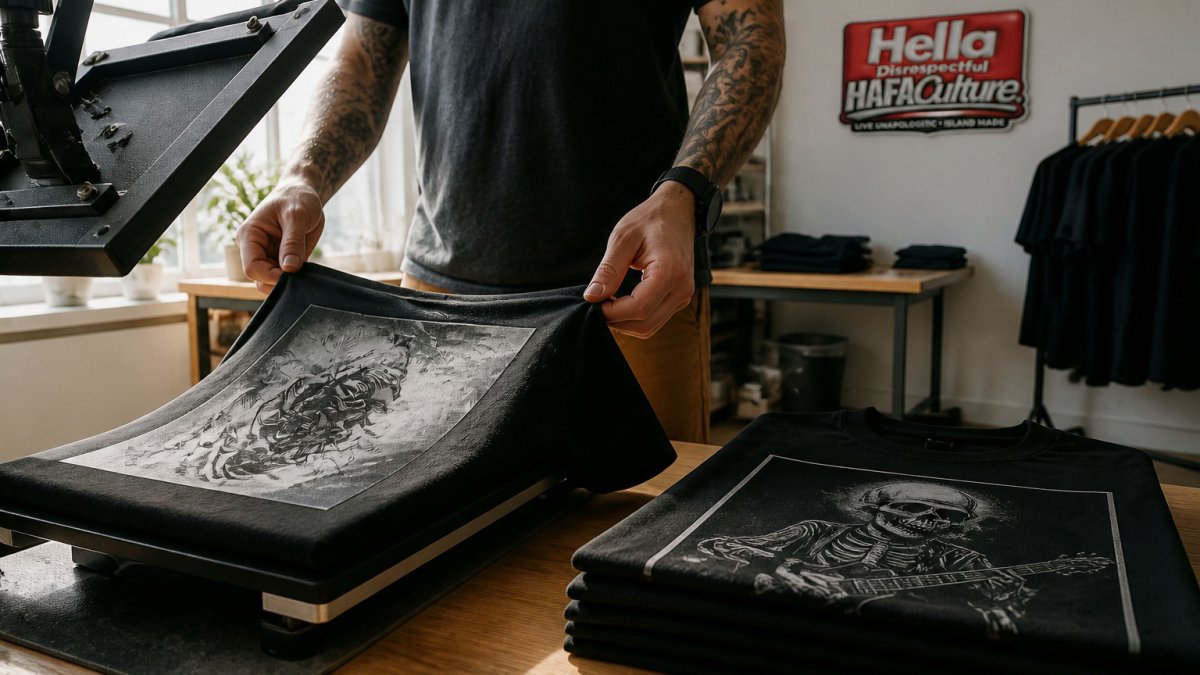
Direct-to-garment and screen printing are the two methods most often compared in apparel printing, and the comparison is where most sustainability claims fall apart. DTG sprays water-based ink directly into the fabric, which suits detailed, full-color artwork on small runs. For a focused look at how it stacks up against another popular option, see DTG vs DTF printing compared. Screen printing pushes ink through stencils, one color at a time, and tends to work best on larger orders with fewer colors. Neither method is automatically the greener one, the comparison depends on ink formulation, setup waste, order size, and how the garment will be washed.
A Method-by-Method Comparison
Use this framework to compare DTG, screen printing, DTF transfers, dye sublimation, and embroidery on the variables that actually drive environmental impact and cost. The ratings below are qualitative patterns most practitioners observe, not lab measurements, ask each supplier for their own inputs.
| Method | Water use | Energy use | Waste profile | Durability | Best order size |
|---|---|---|---|---|---|
| DTG | Low to moderate (water-based inks; pretreatment mist) | Moderate (curing per garment) | Low setup waste; ink and pretreatment containers | Good on cotton; fades faster on blends | 1 to a few hundred |
| Screen printing | Moderate (screen reclaim washes) | Moderate to high (flash curing between colors) | High setup waste per color; reclaim chemicals | Excellent on cotton; cracks on stretch fabrics | 50+ per design |
| DTF transfer | Low (dry process) | Moderate to high (cure + press) | Film and adhesive powder waste; gang sheets reduce it | Very good; holds detail on many fabrics | 1 to thousands |
| Dye sublimation | Low to moderate | Moderate | Low ink waste; limited to polyester and polymer-coated blanks | Permanent on polyester; poor on cotton | 1 to thousands |
| Embroidery | Very low | Low per piece, higher per stitch count | Thread and backing scraps | Excellent; outlasts the garment | 1 to thousands |
Ink Chemistry and Pretreatment Differences
DTG printers typically require a pretreatment solution sprayed onto the garment before printing, then a cure to set the ink. The pretreatment and the ink both shape the wash feel and the color durability. Screen printing uses thicker plastisol or water-based inks and usually needs flash curing between colors.
Water-based inks are common in both methods, but formulations vary widely. Plastisol is a PVC-based ink system that does not dry into the fabric and relies on curing at higher temperatures; water-based inks soak into the fabric and generally produce a softer hand but can require more careful curing. Discharge inks bleach the garment's dye rather than sit on top, which limits them to certain dyed cottons. Ask any supplier which chemistry they use and whether it is certified.
Cost and Order-Size Trade-Offs
Screen printing has higher setup costs because each color needs its own screen. That cost spreads thin on large runs, which is why it often wins on quantity. DTG has little setup, so it suits one-offs and small batches, though the per-shirt cost stays higher as volume grows. DTF sits between the two: no screens, but film and powder costs per design.
Our Custom DTF Gang Sheets start at $14.00 for a 12.5" x 54" sheet, and Single DTF Prints start at $2.00 per design, so small creators can test designs without a minimum order. For practical tips on planning and pricing bulk runs, see tips for bulk custom apparel orders.
Water-Based Ink Apparel Printing: What the Label Really Means
"Water-based" is one of the most used and least defined terms in eco apparel. It generally means the ink carrier is water rather than a petroleum solvent. It does not automatically mean the whole process is low-impact. Pretreatments, binders and curing still count.
When a supplier says water-based, ask for the ink data sheet and a description of the full process. A clear answer is a good sign. Vague answers are a reason to keep looking.
Eco-Friendly Screen Printing: Where It Works and Where It Falls Short
Screen printing can be made more sustainable with water-based inks, reclaimed screens and efficient drying. It works well for bold, flat graphics in a few colors on repeat orders. It falls short on photographic detail and on very small quantities, where setup waste becomes the main problem.
Watch out: a low-impact ink does not fix a design that needs five screens for three shirts. Match the method to the job.
DTF Printing Sustainability: Lifecycle Impacts and Waste
Direct-to-film printing prints the design onto a film, applies adhesive powder, then transfers it to the garment with heat. It handles full-color designs well and works across many fabrics. Its environmental profile depends on the film, the powders and the energy used in curing and pressing.
DTF can produce transfer film waste, so ordering efficiently matters. Gang sheets, which place multiple designs on one sheet, reduce waste per design. For a deeper look at how DTF holds up in durability and real-world wear, read the durable DTF printing guide. Our Custom DTF Gang Sheets are built for this: stack several designs on one sheet and press only what you need.
Certifications, Claims and How to Verify Them
Certifications can help you check claims, but they only cover what they cover. The most useful ones for apparel printing fall into three buckets: fiber and textile standards, chemical and ink standards, and labor standards. Knowing which bucket a claim belongs to tells you what it does and does not prove.
The Standards Worth Knowing
- Global Organic Textile Standard (GOTS): covers organic fiber content and processing chemicals through the supply chain. A GOTS claim on a blank says something about the fiber and wet processing, it does not certify the print ink.
- OEKO-TEX Standard 100: tests finished articles for harmful substances. It can apply to inks and printed garments, so ask whether the certificate covers the ink or only the fabric.
- bluesign: a system for textile supply-chain chemical management. Relevant when a supplier claims low-impact dyes or inks.
- GRS (Global Recycled Standard): verifies recycled content and chain of custody for recycled polyester and other recycled fibers.
- Fair Trade Certified and SA8000: labor-focused standards. They speak to working conditions, not environmental impact.
- USDA Organic: applies to agricultural fiber content, not to printing.
How to Verify a Claim in Five Steps
- Ask for the certificate number and the certifying body. Reputable certifiers publish searchable databases; a number you cannot look up is a red flag.
- Check the scope. Does the certificate cover the specific facility, the specific material, or the specific ink? A certificate for a different factory proves nothing about your order.
- Check the date. Certificates expire and are renewed on cycles. An expired certificate is not evidence.
- Request the ink data sheet. For any water-based or low-impact ink claim, the safety data sheet (SDS) and technical data sheet name the chemistry. If the supplier will not share them, treat the claim as marketing.
- Match the claim to the mechanism. "Eco-friendly" with no named standard, material, or process is not verifiable. "GOTS-certified organic cotton blank printed with OEKO-TEX-certified water-based ink" is.
Where Certifications Fall Short
Certifications do not measure water use, energy use, or waste at the print shop, the variables that most affect a printed garment's footprint. They also do not cover durability, which determines how long a shirt stays out of a landfill. Treat certifications as a floor, not a ceiling, and pair them with the method comparison above and a direct conversation about the supplier's process.
Choosing Your Printing Method for Your Next Drop
Start with three questions: how many pieces do you need, how many colors does the design have, and how will the garment be washed and worn? For guidance tailored to a small brand's needs, see the best printing method for small clothing brands. High-detail, small-run designs point toward DTG or DTF. Bold, few-color designs on large runs point toward screen printing.
Best for: small brands testing designs and creators who want full-color prints with no minimum order.
Skip if: you need thousands of identical one-color shirts. At that volume, a dedicated screen printing run usually makes more sense.
Frequently Asked Questions
Is DTF printing more eco-friendly than screen printing? It depends on the inputs. DTF efficiency improves with gang sheets, but film and adhesive use still matter.
What does water-based ink mean on a shirt? It usually means the ink uses water as its carrier instead of a petroleum solvent.
Can I order a single custom design without a minimum? Yes. Our Single DTF Prints start at $2.00 per design, and our Custom DTF Gang Sheets start at $14.00.
Frequently Asked Questions
What is the difference between screen printing and DTG printing?
Screen printing pushes ink through a mesh stencil, one color at a time, and it is typically most cost-effective for larger runs of a single design. Direct-to-garment (DTG) printing works like an inkjet, spraying water-based ink directly onto the fabric, which suits full-color designs and small quantities without setup screens. Screen printing often holds up well on heavy cotton, while DTG depends heavily on pretreatment and fabric content for wash durability.
Which apparel printing method is the most eco-friendly?
No single method wins on every measure. Water-based inks used in screen printing and DTG generally avoid the solvent emissions of plastisol-based inks, and DTG avoids screen production waste entirely. DTF printing can reduce pretreatment and garment-level waste on small runs, but its transfer films are plastic-based. The lowest-impact choice depends on order size, design complexity and how the garment will be cleaned and kept over time.
Are water-based inks better for the environment?
Water-based inks typically contain fewer volatile organic compounds than solvent or plastisol inks, which reduces air emissions during printing. They soften the hand feel of the fabric more than plastisol and can require careful curing to reach good wash durability. Ask any printer for the ink data sheet and the wash-test results before accepting a water-based claim at face value.
What causes apparel prints to fade or crack?
Fading and cracking usually trace back to inadequate curing, weak pretreatment on dark or cotton-heavy fabrics, or ink that was not formulated for repeated washing. Washing inside out in cool water and avoiding high-heat drying extends print life for any method. When you order custom apparel, request a wash-test sample before committing to a bulk run.
