

Custom Heat Transfers: A 2026 Guide
Table of Contents
- What Are Custom Heat Transfers?
- Types of Custom Heat Transfers: DTF, Screen Print, and Vinyl
- Understanding the DTF Transfer Printing Process
- Gang Sheet Printing Explained: Save Money on Bulk Orders
- Heat Press Settings for Custom Transfers: Getting It Right
- How to Apply Custom Heat Transfers Without Failure
- Choosing Between DIY and Professional Transfer Services
- Conclusion
- Frequently Asked Questions
Last Updated: September 23, 2026
What Are Custom Heat Transfers?
Custom heat transfers are printed designs applied to fabric using heat and pressure. Unlike screen printing or direct embroidery, heat transfers let you create detailed, full-color graphics on apparel without minimum order quantities or lengthy setup times. At Hella Disrespectful Clothing, we use direct-to-film (DTF) technology to deliver vibrant, durable transfers that hold up through repeated washing and wear.
A custom heat transfer starts as a digital design: you upload artwork, we print it onto special film, and you press it onto your garment using a heat press. The adhesive powder bonds permanently to fabric fibers under heat and pressure, creating a soft, vibrant graphic that maintains color through repeated washing.
Custom heat transfers solve a real problem for small brands and creators: no minimum orders, no weeks of waiting. You upload, order, and press the same day. This flexibility makes them ideal for limited drops, personal projects, and testing designs before bulk orders.
Types of Custom Heat Transfers: DTF, Screen Print, and Vinyl
Three main heat transfer methods dominate custom apparel, each with different strengths based on design complexity, budget, and durability needs.
Direct-to-Film (DTF) prints your entire design, full color, gradients, fine details, directly onto special film that transfers to the garment when pressed. DTF handles photorealistic images, complex color work, and intricate logos without color separation headaches. The transfer is wash-resistant, lasts as long as the garment, costs low per unit, and requires no minimums.
Screen-printed transfers use traditional screen printing, then cut and heat-press the printed fabric onto your garment. Ideal for solid colors and bold graphics, but each color requires a separate screen, making multi-color designs expensive. Higher setup costs mean screen printing works best for larger orders.
Heat transfer vinyl (HTV) cuts designs from colored vinyl sheets and presses them onto fabric. Ideal for simple, solid-color graphics like text or logos. Affordable and durable, but can't handle photorealistic images or fine details, and may crack or peel if the garment stretches.
For creators and small business owners, DTF handles complexity, requires no minimums, and delivers fast turnaround.
Understanding the DTF Transfer Printing Process
DTF printing is straightforward: your design prints onto special film using water-based inks mixed with adhesive powder that bonds the design to fabric during pressing.
Here's the process: upload a high-quality PNG to our DTF Lab. We print it onto DTF film, and ship the finished transfer ready to press.
Once the transfer arrives, you can press it immediately with no waiting or inventory buildup.
Gang Sheet Printing Explained: Save Money on Bulk Orders
A gang sheet stacks multiple designs on a single large sheet of DTF film. Combine 5, 10, or 20 designs on one sheet and pay one price, this is where DTF becomes genuinely cost-effective for brands running drops or building inventory.
A single 3-inch transfer costs $2. A 12.5" x 54" gang sheet costs $14. A 12.5" x 108" sheet costs $22.
You receive one large sheet with all designs printed and ready to cut and press, no waiting for individual transfers or managing separate orders.
Batch your designs: launch a drop with 8 graphics on one gang sheet, or gang 12 different names for team apparel. Minimal setup fee, real cost savings.
Gang sheets come in five sizes: 12.5" x 54" ($14), 12.5" x 108" ($22), 12.5" x 162" ($40), 12.5" x 216" ($52), and 12.5" x 364" ($65).

Heat Press Settings for Custom Transfers: Getting It Right
Heat press settings are where most DTF applications fail. Too little heat or pressure means the transfer won't bond; too much scorches the design or melts the adhesive. Testing gets you consistent results.
Temperature: Most DTF transfers press at 320-330°F. Start at 325°F and test on your actual garment. If the transfer peels, increase by 5°F. If scorched or bleeding, lower by 5°F.
Pressure: Use firm, even pressure (medium-high on most presses). Too little won't activate the adhesive; too much crushes details or shifts the transfer. Test first.
Dwell time is how long you hold the heat press down. Most DTF transfers need 10-15 seconds; thicker fabrics may need 15-20 seconds, thin fabrics 10-12 seconds. Test on your actual garment.
Peel method matters. Hot peel (immediately after pressing) is faster but requires practice. Cold peel (after 30-60 seconds cooling) is more forgiving. Beginners should cold peel until comfortable.
Keep a log of temperature, pressure, dwell time, peel method, and fabric type for every batch. This reference guide helps when switching fabrics or garment types.
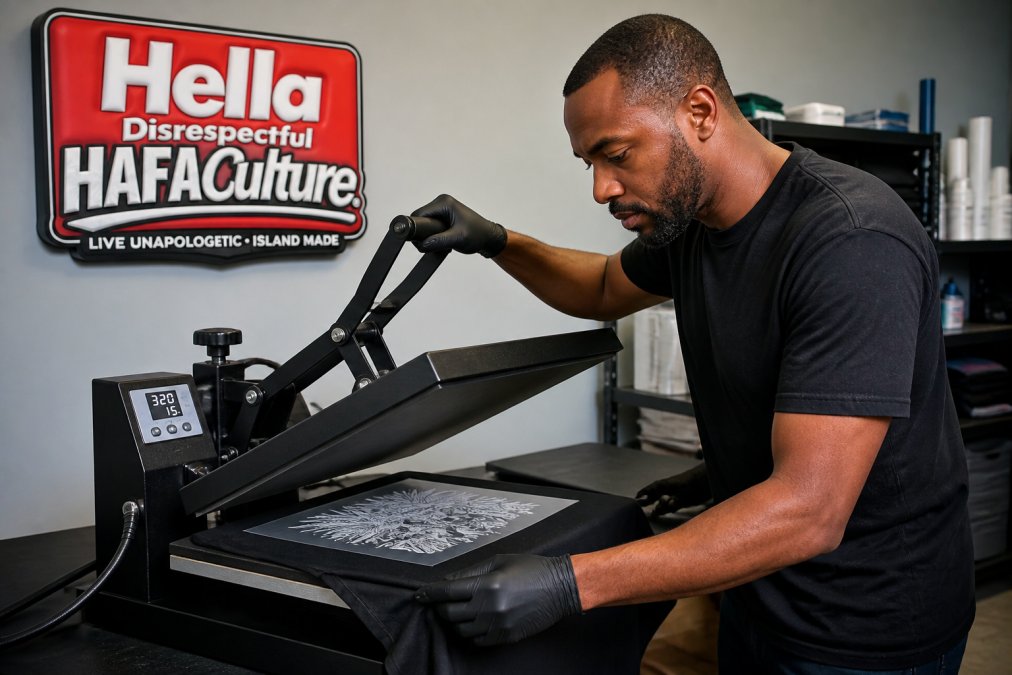
How to Apply Custom Heat Transfers Without Failure
Most transfer failures happen at application, not printing. Here's how to apply custom heat transfers correctly.
Step 1: Prepare your garment. Ensure it's clean, dry, and wrinkle-free. Remove labels or tags that might interfere with the heat press.
Step 2: Position the transfer. Place it face-down exactly where you want it (usually centered on chest or back). Use the heat press platen to align it straight, precision matters here.
Step 3: Set your heat press. Use your tested settings for your specific fabric. If new, start at 325°F, medium-high pressure, and 12 seconds.
Step 4: Press. Close the heat press slowly and steadily. Hold for your full dwell time.
Step 5: Peel the film. If cold peeling, wait 30-60 seconds. Peel the film backing slowly at a 45-degree angle. If the transfer lifts with the film, stop, press for 5 more seconds, and try again.
Step 6: Press again (optional but recommended). After peeling, press for 3-5 more seconds with a protective sheet on top to ensure full adhesive set.
Common failures: transfer peels after washing (insufficient heat/pressure), design looks dull (too much pressure), transfer shifts (poor positioning), or film tears (peeling too fast).
Choosing Between DIY and Professional Transfer Services
DIY pressing makes sense for a few pieces or testing designs. Professional services make sense if you're running a brand, handling bulk orders, or lack a heat press.
DIY approach: Buy or rent a heat press ($200-400 entry-level), order transfers, and press yourself. You control timing but face upfront costs, a learning curve, and time investment. DIY pays for itself at 100+ pieces.
Professional pressing: We handle application for you ($5-8 per item). Your pieces arrive ready to wear with no equipment investment, learning curve, or time spent pressing. Best for small orders, one-offs, or guaranteed quality.

For Hella Disrespectful Clothing customers, professional pressing means your pieces arrive pressed, ready to ship or wear immediately.
The choice depends on your volume and timeline. Making 5 custom pieces for yourself? Order transfers and press them DIY. Running a drop with 50 pieces? Use professional pressing and skip the equipment investment. Running a sustained business with hundreds of pieces per month? Invest in your own heat press and press in-house.
Conclusion
Custom heat transfers are the fastest, most flexible way to create custom apparel at any scale. Whether you're testing a design, building a brand, or running a full production operation, DTF transfers deliver vibrant, durable graphics without minimums or long lead times.
The key is understanding your options, dialing in your process, and knowing when to press yourself versus outsourcing to professionals. At Hella Disrespectful Clothing, we handle the printing side with vibrant, high-quality transfers. Our single prints start at just $2, and our professional pressing service means your designs arrive ready to wear. Get started with Hella Disrespectful Clothing's DTF Lab and bring your designs to life with transfers that actually hold up.

Ready to launch your custom apparel line? Hella Disrespectful Clothing's DTF transfer services eliminate the guesswork. Order gang sheets for bulk savings, use our professional pressing service to skip equipment costs, or go DIY with our single prints. Start pressing today.
| Transfer Type | Best For | Price | Durability |
|---|---|---|---|
| DTF (Direct-to-Film) prints | Full-color designs, small orders, fast turnaround | $2-$8 | Wash-resistant, long-lasting |
| Custom DTF Gang Sheets | Multiple designs, bulk orders, cost savings | $14.00 - $65.00 per sheet | Wash-resistant, long-lasting |
| Solid colors, large orders, maximum durability | $3-$6 | Extremely durable | |
| Simple logos, text, solid colors | $1-$3 | Good durability, can crack with stretching |
Frequently Asked Questions
How much do custom heat transfers cost?
Pricing depends on transfer type and order size. Single DTF prints start at $2 for pocket-sized designs and go up to $8 for oversized 14-inch prints. Gang sheets, multiple designs on one sheet, cost $14 for a 12.5" x 54" sheet, making them ideal for bulk orders. Add-on services like rush processing ($5), design creation ($15-$30), or heat press application ($5-$8) adjust the final price. No minimum order requirements means you can order one transfer or hundreds without price penalties.
What is the difference between DTF and HTV transfers?
DTF (direct-to-film) transfers produce vibrant, detailed prints with a soft feel. They're ideal for complex designs and photographs.
How do I prepare my artwork for high-quality heat transfers?
Submit designs as high-resolution PNG files with transparent backgrounds when possible. Ensure your design is sized correctly for the transfer placement. If your design needs cleanup or resizing, design services are available for $15-$30 depending on complexity.
Are there minimum order requirements for custom heat transfers?
No. Custom heat transfers have no minimum order requirements. You can order a single transfer or thousands without price increases based on quantity thresholds. This makes them perfect for testing designs, one-off custom pieces, or small business runs. Gang sheets offer bulk savings when you stack multiple designs on one sheet, but there's no obligation to order in bulk.