

Why Independent Streetwear Matters Now in 2026
Table of Contents
- The Shift From Corporate Trends to a Cultural Movement
- Streetwear Culture and Individual Expression in 2026
- How to Identify Authentic Streetwear (Not Just Branded Basics)
- The Benefits of Supporting Small Clothing Brands
- Why Independent Streetwear Matters Now: DTC Economics and Transparency
- What Corporate Streetwear Gets Wrong (and Why It Costs You)
- How to Build a Wardrobe That Reflects Your Identity
- Conclusion: The Future of Streetwear Is Independent
- Frequently Asked Questions
Last Updated: September 12, 2026
The Shift From Corporate Trends to a Cultural Movement
Independent streetwear matters now because the market has fundamentally changed. What started as a niche subculture has become a full-blown cultural phenomenon, and the brands driving it are no longer the corporate giants. This guide from Hella Disrespectful Clothing breaks down why independent labels are winning, what corporate streetwear gets wrong, and how to build a wardrobe that actually reflects who you are.
The old model was simple: big brands set trends, consumers followed, and everyone bought the same logo-heavy pieces. That model is collapsing. According to Business of Fashion's State of Fashion report, consumer behavior has shifted decisively toward authenticity and away from mass-produced corporate trends.
Independent streetwear is apparel designed, produced, and sold by brands that operate outside the corporate fashion machine. These labels prioritize creative risk, individual expression, and community-driven design over shareholder pressure and revenue targets.
The shift isn't just aesthetic. It's economic. It's cultural. And it's happening right now.
Streetwear Culture and Individual Expression in 2026
Streetwear culture and individual expression have always been linked, but the relationship has intensified. In 2026, what you wear is a statement of identity, not just a fashion choice.
Gen Z fashion consumers are driving this. They grew up watching corporate brands co-opt subculture after subculture, and they've had enough. A common approach among independent labels is to design for a niche audience first and let the broader market catch up, rather than chasing mass appeal from day one.
This is where brand storytelling becomes a competitive advantage. Independent labels build loyal communities because they speak in an authentic voice. They don't need shareholder approval to take a creative risk.
How to Identify Authentic Streetwear (Not Just Branded Basics)
Authentic streetwear is made by brands that design their own pieces, control their own production, and sell directly to their audience. Branded basics are mass-produced blanks with a logo slapped on top.
Here's how to tell the difference:
- Check the fabric weight. Authentic streetwear typically uses heavyweight cotton, often 6.5 oz or heavier (textileexchange.org). Thin, flimsy material is a red flag.
- Look at the design philosophy. Does the brand have a consistent point of view, or does it jump on every trend?
- Trace the supply chain. Independent labels are usually transparent about where and how their products are made.
- Check the fit and construction. Reinforced stitching, structured necklines, and clean finishes signal quality control.
- Read the brand's story. If you can't find out who's behind it, that's a problem.
A common mistake is assuming a high price tag means authenticity. It doesn't. Some of the most authentic independent labels price their pieces affordably because they sell direct and cut out middlemen.
The Benefits of Supporting Small Clothing Brands
The benefits of supporting small clothing brands go well beyond getting a unique piece. Your money stays in the hands of people who actually care about the product.
When you buy from an independent label, you're funding creative integrity instead of shareholder dividends. You're supporting design experimentation that corporate brands won't risk. You're helping a niche audience get products made for them, not for a focus group.
There's also the quality factor. Small brands often use higher-quality materials because they're not trying to hit a mass-market price point. Heavyweight fabrics, better construction, and real attention to detail are common.
And then there's the community aspect. Independent labels tend to build real relationships with their customers. Community-driven platforms and social channels let buyers connect directly with the people making their clothes.
Why Independent Streetwear Matters Now: DTC Economics and Transparency
Most coverage of independent streetwear stops at the vibe. The reason independent labels are actually outlasting corporate ones right now is a cost-structure story, and it's worth walking through because it explains everything from pricing to product quality to why a small label can pivot in a week while a conglomerate needs a season.
The traditional wholesale math. A conventional apparel brand sells to a retailer at roughly half of what the customer eventually pays, the industry calls this "keystone" markup. If a hoodie retails for $80, the brand collected about $40. Out of that $40, the brand still has to cover fabric, cut-and-sew, printing or embroidery, tags, poly bags, freight, warehousing, and its own overhead. On a heavyweight garment, materials and labor alone can eat most of that $40 before any marketing spend. That's the squeeze that pushes wholesale-dependent brands toward thinner fabric, cheaper trims, and larger minimum orders to hit a viable unit cost.
What DTC changes. When a brand sells directly through its own site, it keeps the retail price instead of the wholesale price. The same $80 hoodie now returns $80 to the brand minus payment processing (typically around 2.9% plus a small per-transaction fee on major processors), shipping, and any ad spend. That extra margin is the entire reason a small label can afford 6.5 oz or heavier ring-spun cotton, double-needle stitching, and a real quality-control step, the money that would have gone to a retailer's margin gets reinvested into the garment.
Why this makes independent labels more resilient, not less. A conglomerate has to forecast demand a season or more ahead, commit to large production runs, and answer to quarterly earnings. An independent label can run a small drop, sell it through, and use the revenue to fund the next one. That's a shorter cash cycle and far less inventory risk. It also means the label can kill a design that isn't working instead of marking it down for six months. The trade-off is real: DTC brands carry the full cost of customer acquisition, they don't get the foot traffic a department store provides, and a single bad drop can hurt more when you don't have a corporate balance sheet behind you.
Supply chain transparency is the natural byproduct. A brand that sells direct and produces in small runs usually knows its supply chain because it's short. It can name the mill, the cut-and-sew shop, and the printer. A conglomerate sourcing across multiple continents through tiers of contractors often cannot trace a finished garment back to a specific facility without significant effort, which is why broad "ethically made" language is common and specific claims are rare.
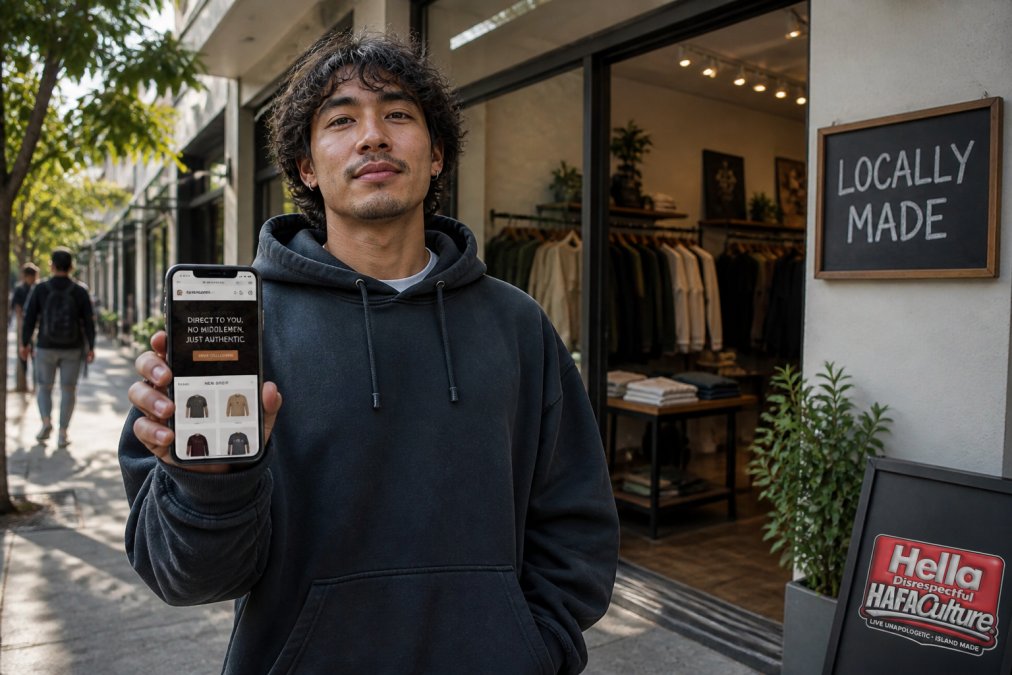
Here's how to read a transparency claim like an operator rather than a shopper:
- Specificity over sentiment. "Made in a family-run shop we've worked with for three years" is verifiable. "Conscious production" is not.
- Named materials. Fabric weight, fiber content, and finish (ring-spun, combed, garment-dyed) are checkable facts. "Premium cotton" is a mood.
- A visible production step. Brands that print, embroider, or finish in-house can usually show it. That's a real transparency signal because it removes a layer of outsourcing.
- Consistent answers. Ask the same sourcing question twice, months apart. A brand that actually knows its supply chain gives the same answer.
According to McKinsey's fashion industry analysis, consumers increasingly factor sustainability and ethical production into purchasing decisions. The practical point for independent labels is that they're structurally positioned to meet that demand, not because they're more virtuous, but because a short supply chain is simply easier to describe honestly than a long one.
What Corporate Streetwear Gets Wrong (and Why It Costs You)
Corporate streetwear doesn't fail because the people running it lack taste. It fails because the structure they operate inside makes certain outcomes almost inevitable. Understanding the mechanism is more useful than another list of grievances, because it tells you what to look for before you spend money.
The trend cycle is a timing problem, not a taste problem. A large brand has to design, sample, produce, and ship a collection many months before it hits shelves. By the time a trend is visible enough to justify a big production run, the subculture that originated it has usually already moved on. The result is product that arrives culturally late and gets discounted, which trains the brand to chase the next trend even harder. Independent labels compress that timeline because they produce in smaller runs and can react in weeks rather than seasons.
Cultural references get flattened by committee. When a design has to clear legal, marketing, and regional approval across multiple markets, anything specific, a regional slang term, a local landmark, a reference that only makes sense to one community, gets sanded down until it's inoffensive to everyone and meaningful to no one. That's how social commentary and marginalized voices end up as decoration rather than statement. The dilution isn't malicious; it's what happens when a design has to survive a dozen stakeholders.
Saturation is a margin strategy, not an aesthetic one. Corporate labels flood the market with the same silhouette because volume is how they hit earnings targets. When every brand drops a boxy graphic hoodie in the same three colorways, the category stops signaling anything. You're no longer wearing a point of view, you're wearing inventory.
Shareholder pressure shapes the product in ways you can feel. Quarterly earnings targets reward predictable, repeatable product. That's why corporate streetwear tends to iterate on last year's bestseller rather than take a creative risk. It's also why the fabric often gets lighter and the trims cheaper over successive seasons: protecting margin is easier than raising price in a saturated category.
What this actually costs you as a buyer:
- You pay a logo premium. A meaningful share of the price covers marketing, retail markup, and brand overhead rather than materials or construction.
- You get a shorter useful life. Lighter fabric and simplified construction wear out faster, so the real cost per wear is higher than the sticker price suggests.
- You lose differentiation. Wearing the same mass-produced piece as everyone else removes the identity signal that made streetwear worth wearing in the first place.
- You fund the next co-optation. Every purchase reinforces the cycle where subcultural meaning gets extracted, mass-produced, and sold back.
None of this means every large brand makes bad clothes. It means the incentives point somewhere different from where independent labels point, and that difference shows up in fabric weight, design specificity, and how long a piece stays worth wearing.
How to Build a Wardrobe That Reflects Your Identity
Building a wardrobe that reflects your identity starts with deciding what you actually want to say. Then you find the brands that say it with you.
Here's a practical approach:
- Define your style evolution. What subcultures, regions, or ideas matter to you? Start there.
- Mix independent labels with a few staple pieces. You don't need to replace everything at once.
- Prioritize heavyweight, well-constructed basics. A great heavyweight tee outperforms five cheap ones.
- Look for brands with a real point of view. If the brand's story doesn't resonate, the piece won't either.
- Support labels that support your community. Regional pride, cultural heritage, and shared values all matter.
For those who want custom pieces, DTF printing services let you put your own designs on high-quality garments. Hella Disrespectful Clothing offers custom DTF printing alongside its Hafa Culture-inspired collections, which is a good example of how an independent label can serve both self-expression and cultural representation.
If you want a starting point, the WANTED: MAC BEAR TEE, PREMIUM HEAVYWEIGHT EDITION is a solid entry piece: structured fit, ring-spun cotton, and a design that speaks for itself. The HIP HIPPO TEE, PREMIUM HEAVYWEIGHT EDITION hits the same quality mark with a louder attitude.


Conclusion: The Future of Streetwear Is Independent
The fashion industry shift toward independent labels isn't a trend. It's a correction. Corporate streetwear spent two decades absorbing subcultures and selling them back at a markup. Consumers noticed.
Independent streetwear matters now because it's the only segment of the market still built around creative integrity, authentic voice, and community rather than revenue drivers. The brands winning in 2026 are the ones that never needed shareholder permission to take a creative risk.
That's the space Hella Disrespectful Clothing was built for. Bold designs, heavyweight construction, Hafa Culture-inspired collections, and custom DTF printing for people who want their own designs on quality garments. If you're done blending in, shop the drops and wear something that speaks for itself.
Frequently Asked Questions
What defines an independent streetwear brand?
An independent streetwear brand operates without backing from large corporations or fashion conglomerates. It controls its own design, production, and marketing, often releasing limited drops directly to consumers. Independent brands prioritize creative risk and authentic voice over shareholder returns. They typically produce in smaller batches, use transparent supply chains, and build community-driven followings. Look for brands that share their design philosophy, show behind-the-scenes production, and engage directly with customers rather than relying on mass retail distribution.
Why is the shift toward independent labels happening in fashion?
The shift accelerated as consumers grew tired of saturated market offerings from corporate labels that prioritize revenue over creativity. Gen Z and younger millennials now seek individual expression through clothing that reflects their values, including sustainability and social commentary. Digital community platforms let independent brands reach niche audiences without traditional retail gatekeepers. Direct-to-consumer economics also allow smaller brands to offer higher quality at competitive prices by cutting out middlemen. This fashion industry shift rewards authenticity and creative integrity over mass-market appeal.
How does independent streetwear differ from luxury streetwear?
Luxury streetwear often carries premium price tags driven by brand name and exclusivity, with production frequently outsourced to the same factories as fast fashion. Independent streetwear focuses on creative freedom, limited runs, and direct relationships with customers. While luxury brands rely on celebrity endorsements and hype cycles, independent labels build brand loyalty through consistent design philosophy and community engagement. Independent brands also tend to be more transparent about supply chains and ethical production, which matters to buyers who want their clothing to align with their values.
Is the era of mass-market streetwear coming to an end?
Mass-market streetwear is losing cultural relevance as consumers recognize the difference between authentic design and corporate trend-chasing. The saturation of the modern market means everyone can buy the same logo tee at a mall, which erodes the exclusivity and subculture roots that made streetwear compelling. Independent labels are filling the gap by offering unique designs, limited drops, and genuine brand storytelling. While mass-market brands will continue to exist, their influence on style evolution is diminishing as buyers prioritize authenticity and individual expression over mainstream approval.